Quick answer: Commercial building construction in the U.S. typically costs $100–$1,000+ per square foot, depending on building type, location, and finish level. Warehouses start around $100/sq ft. Office buildings range from $240–$1,000+. Hospitals and specialized facilities can exceed $1,000/sq ft. The sections below break down each building type, regional differences, soft costs, and a simple formula to calculate your project-specific number.
National Average Cost Benchmarks (2025–2026)
When people ask about the cost per square foot of a commercial building, they’re usually looking for a realistic starting range — not a single number. The truth is, costs vary widely, but national benchmarks help set expectations.
For 2025–2026, most commercial construction projects in the U.S. fall roughly within these ranges:
Low-end projects: around $200–$300 per sq ft
Mid-range commercial buildings:$300–$600 per sq ft
High-end or complex projects:$600–$1,000+ per sq ft
These figures typically include hard construction costs such as structure, materials, and labor. They may or may not include soft costs like design fees, permits, financing, and contingency allowances.
Think of these benchmarks as a planning tool, not a final quote. Your actual cost will depend heavily on where you build, what you build, and how complex the project is.
Key Factors That Drive Cost Per Square Foot
Several core factors determine where your project lands within the cost range. Understanding these early can help you avoid budget surprises later.
Location & Geography
Location is one of the biggest cost drivers.
West Coast and major metro areas (such as California, New York, and the Northeast) often have higher labor rates, stricter codes, and higher material costs.
Midwest and Southern states generally offer lower construction and labor costs, making projects more affordable per square foot.
Urban sites often cost more due to limited space, traffic control, and logistics, while suburban or rural sites are usually cheaper to build on.
Even within the same state, city-to-city differences can be significant.
Building Type & Use
Not all commercial buildings are built the same, and their purpose strongly affects cost.
Warehouses & industrial buildings are usually the most affordable due to open layouts and minimal finishes.
Retail spaces fall in the middle, depending on interior build-out level.
Office buildings vary widely based on class and amenities.
Healthcare facilities and hotels are among the most expensive due to specialized systems, safety requirements, and finishes.
The more systems a building needs, the higher the cost per square foot.
Building Height & Structural Complexity
The taller and more complex the structure, the more it costs to build.
Single-story buildings are generally the most cost-efficient.
Structural design, wind loads, and seismic requirements all add to complexity and cost.
Materials & Finishes (Class A vs B vs C)
Material quality and finish level make a noticeable difference in cost.
Class C buildings focus on function over appearance and use basic materials.
Class B buildings balance durability and aesthetics with moderate finishes.
Class A buildings feature premium materials, high-end façades, advanced systems, and modern interiors.
Upgrading finishes may improve long-term value, but it significantly raises upfront cost per square foot.
Labor & Permitting Costs
Labor and permitting are often underestimated but can heavily impact the budget.
Union labor markets typically have higher hourly rates but may offer productivity and quality benefits.
Non-union markets usually cost less but vary by region and skill availability.
Permit fees, inspections, and compliance requirements differ by jurisdiction and can add thousands — or millions — to large projects.
Projects in areas with strict zoning and building regulations tend to cost more overall.
Bottom line: The cost per square foot of a commercial building isn’t just about size — it’s about location, purpose, design complexity, materials, and local labor conditions. Understanding these factors early puts you in control of your budget and helps you plan with confidence.
Breakdown by Building Type
One of the fastest ways to estimate commercial building cost per square foot is to look at the building type. Each type has different layout needs, systems, and finish levels — and that directly affects cost.
Office Buildings
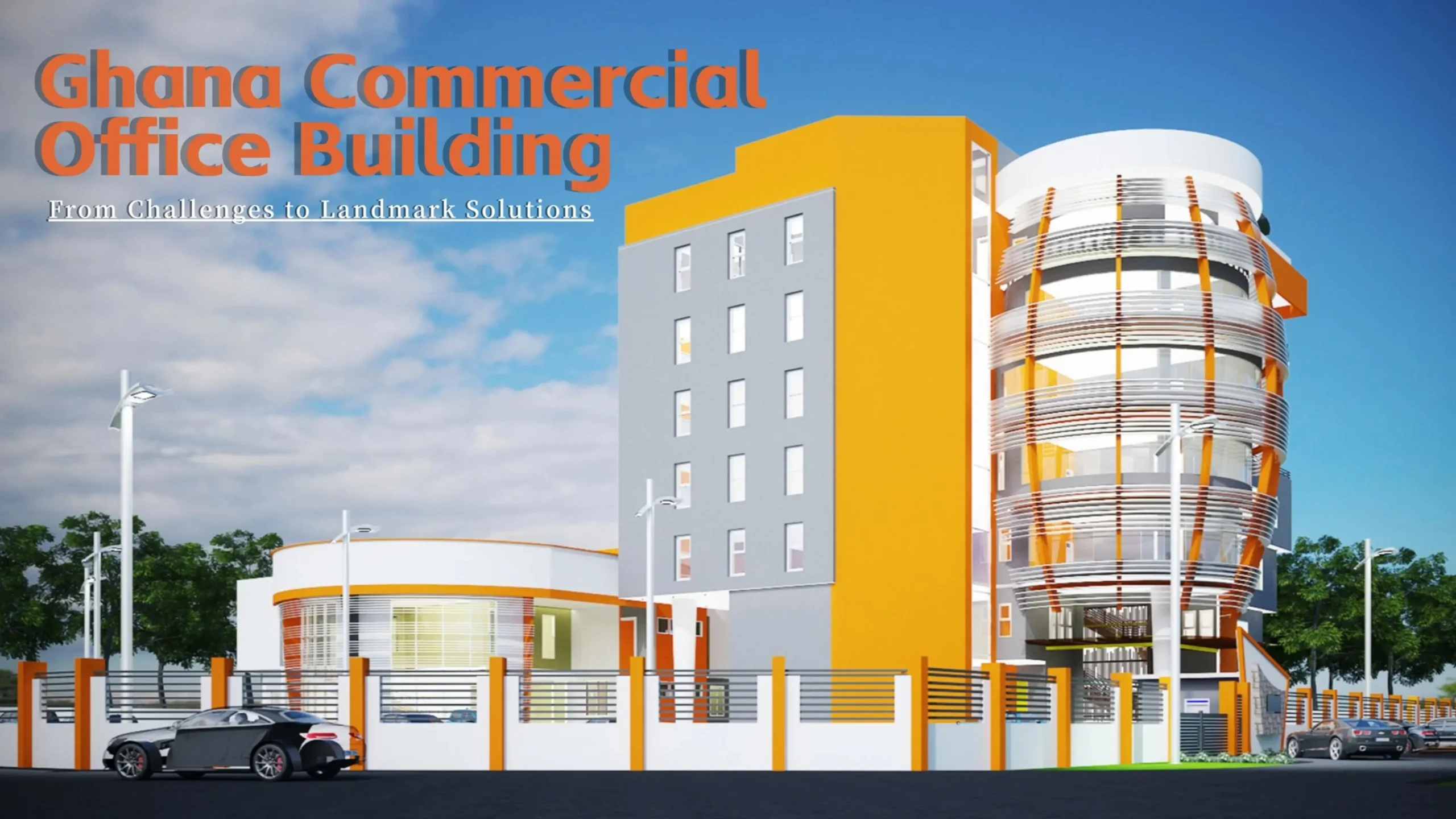
Ghana Commercial Office Building modern landmark design
Estimated cost:$240–$1,000+ per sq ft
Office construction has one of the widest cost ranges. Why? Because office buildings vary greatly in height, class, and amenities.
Low-rise, Class C offices with simple layouts sit at the lower end.
Class B offices add better finishes, HVAC, and shared spaces.
Class A or high-rise offices include premium façades, elevators, advanced systems, and structured parking — pushing costs toward the top of the range.
Height and building class are the biggest cost drivers here.
Retail & Shopping Centers
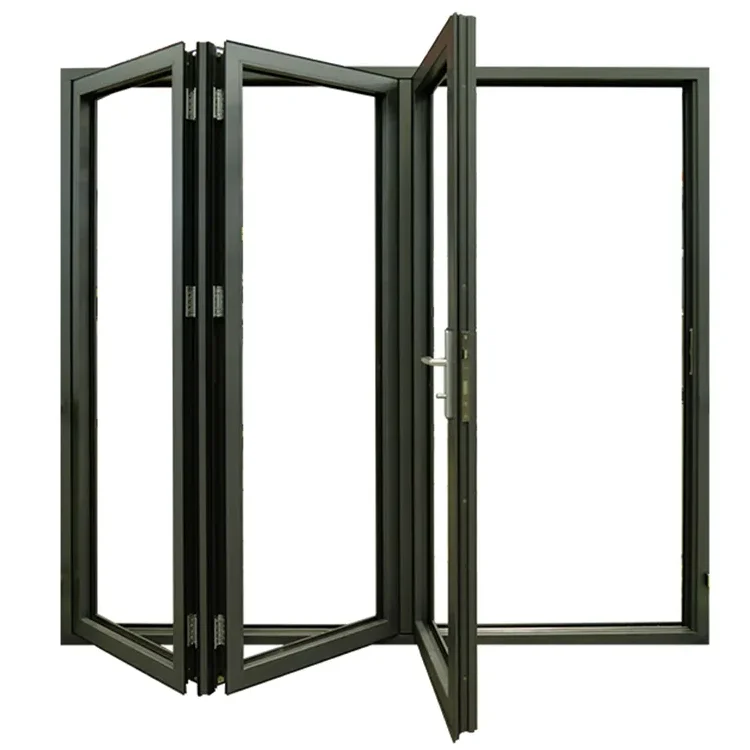
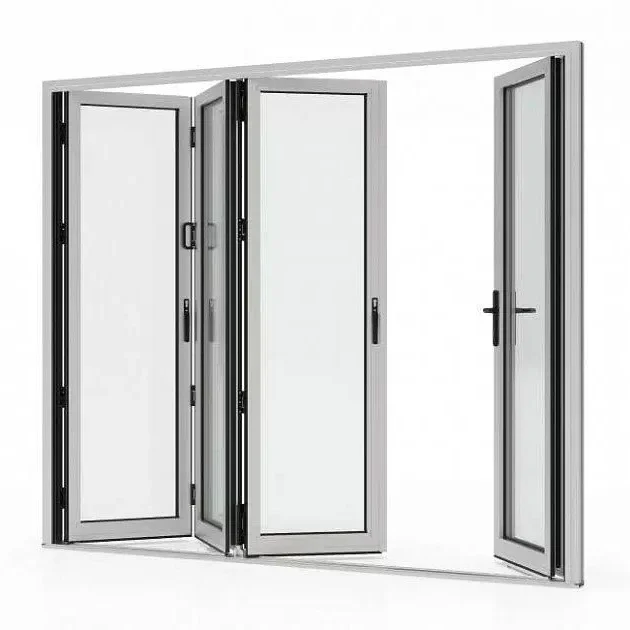
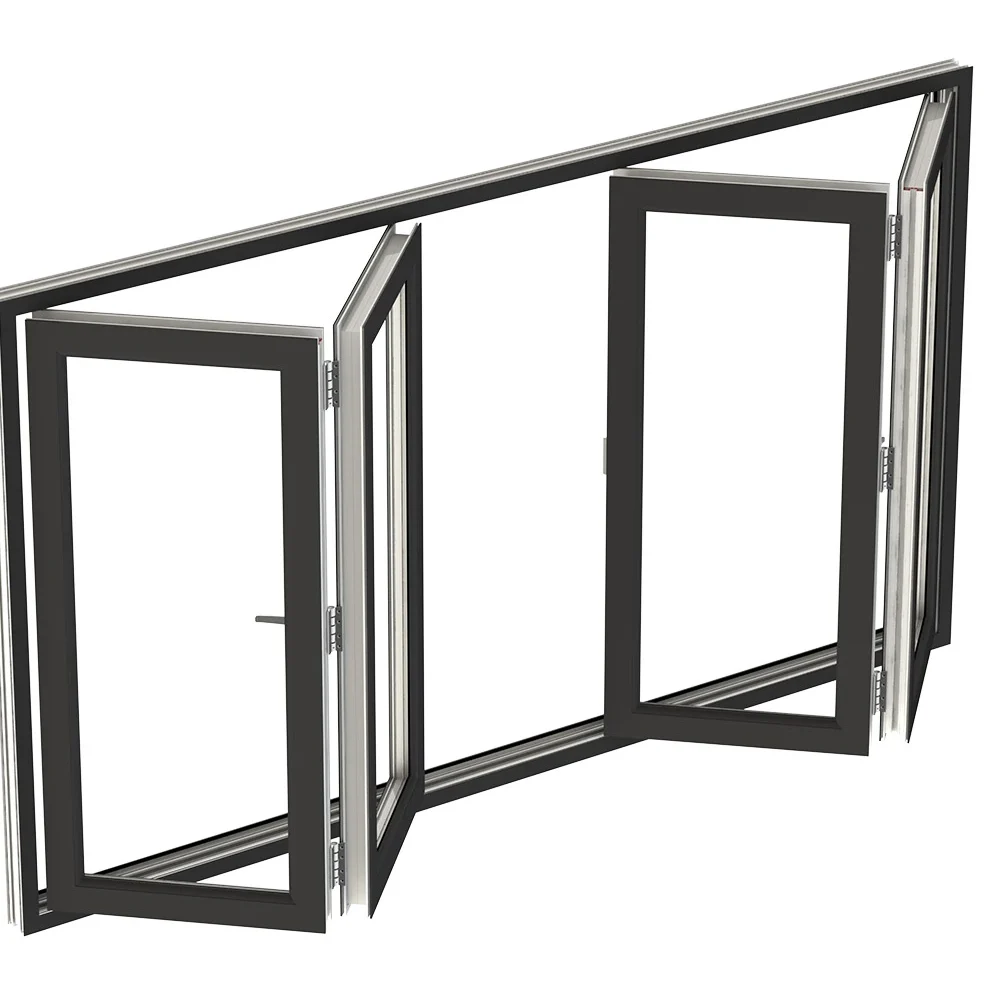
Retail storefront with large bi fold glass doors
Estimated cost:$370–$580 per sq ft
Retail costs depend heavily on tenant fit-outs.
Basic retail shells are relatively affordable.
Full shopping centers with custom interiors, storefront glazing, and high foot-traffic durability cost more.
Restaurants and specialty retail often exceed averages due to plumbing, ventilation, and finishes.
Interior build-out level matters just as much as the building itself.
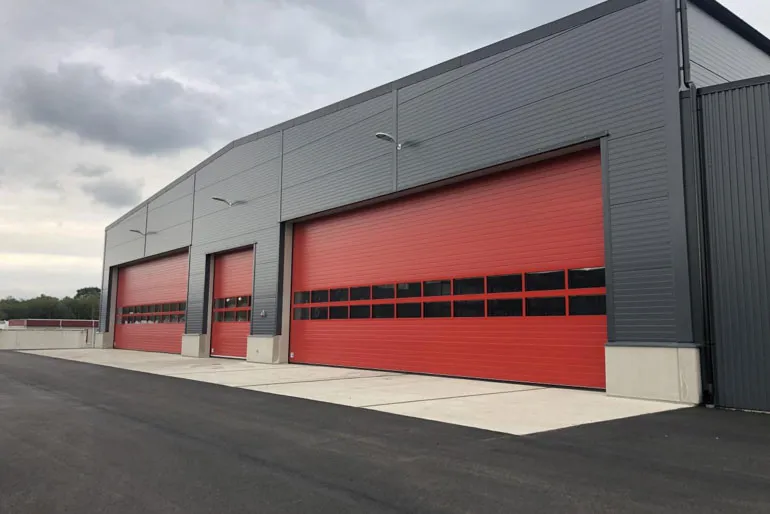
Warehouses & Industrial Buildings
Estimated cost:$100–$275 per sq ft
Warehouses are typically the most cost-efficient commercial buildings.
Standard storage or distribution centers sit at the lower end.
Facilities with high clear heights, heavy floor loads, automation, or climate control cost more.
Simple structure, minimal finishes, and open layouts keep costs down.
Healthcare & Specialized Facilities
Estimated cost:$450–$1,020+ per sq ft
Healthcare buildings are among the most expensive to construct.
Medical offices already exceed standard commercial costs.
Hospitals and specialized care facilities require strict codes, backup power, advanced HVAC, and medical-grade materials.
Regulatory compliance and specialized systems drive costs higher than most other building types.
Hospitality (Hotels)
Estimated cost:$130–$550 per sq ft
Hotel costs vary widely based on brand and service level.
Budget and limited-service hotels are more affordable.
Full-service and luxury hotels include restaurants, conference areas, and premium finishes.
Room count, amenities, and brand standards all influence cost per square foot.
Educational & Community Buildings
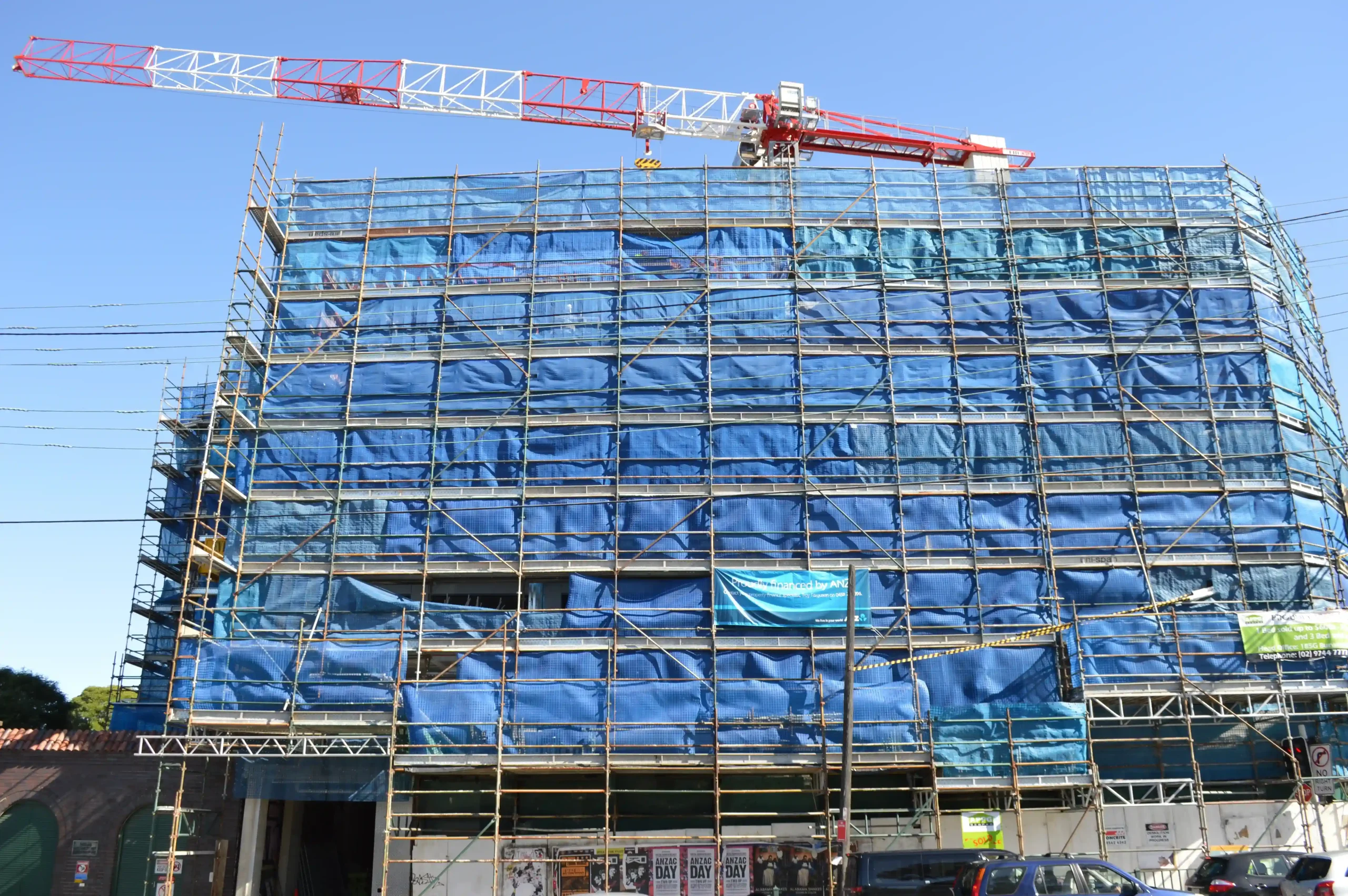
Uruguay school under construction with workers onsite
Estimated cost:Varies widely
Schools, universities, and community buildings fall into a broad range.
Basic classrooms and community centers are lower cost.
Research labs, auditoriums, and multi-use campuses increase complexity and price.
Public funding requirements and long-term durability also affect costs.
Regional & Market Differences
Where you build can change your cost per square foot as much as what you build.
High-Cost Metro Areas
Major cities and coastal regions consistently sit at the top of the cost range.
New York City
San Francisco
Boston
East Coast and West Coast metros
Higher labor rates, stricter building codes, dense urban sites, and logistics challenges all increase costs.
Mid-Range & Lower-Cost Markets
Construction is generally more affordable in inland regions.
Midwest
Southern United States
These areas benefit from lower labor costs, fewer zoning restrictions, and easier site access — often resulting in better cost efficiency per square foot.
Key takeaway: The cost per square foot of a commercial building depends on both building type and location. Understanding these two factors together gives you a far more accurate budget estimate than national averages alone.
Soft Costs & Additional Budget Considerations
When estimating the cost per square foot of a commercial building, construction isn’t the whole story. Soft costs can add 15%–35% to your total budget and are often overlooked early on.
Key soft cost components include:
Design & engineering fees Architectural, structural, MEP, and consultant services required to design and coordinate the project.
Permits & approvals Local permits, zoning reviews, inspections, and compliance fees vary by jurisdiction.
Contingencies A safety buffer (typically 5%–10%) for scope changes, price increases, or site surprises.
Planning for soft costs early helps prevent budget gaps and keeps projects moving smoothly.
How to Calculate Your Specific Cost Per Square Foot
To get a realistic number for your project, use a simple step-by-step approach.
Step-by-Step Cost Per Sq Ft Formula
Add total hard costs Construction, materials, labor, and equipment.
Add total soft costs Design, permits, financing, insurance, and contingency.
Calculate total project cost Hard costs + soft costs = total budget.
Divide by total building area Total project cost ÷ total square footage = cost per square foot.
This method gives you a project-specific cost per sq ft, not just a national average — making it far more useful for budgeting and decision-making.
Ready to Estimate Your Commercial Building Cost?
Every project is different — and averages only go so far. If you’re planning a new commercial building or budgeting for an upcoming project, getting accurate, project-specific cost per square foot is key.
Planning a commercial build? Windows and doors are 8–15% of your total construction budget.
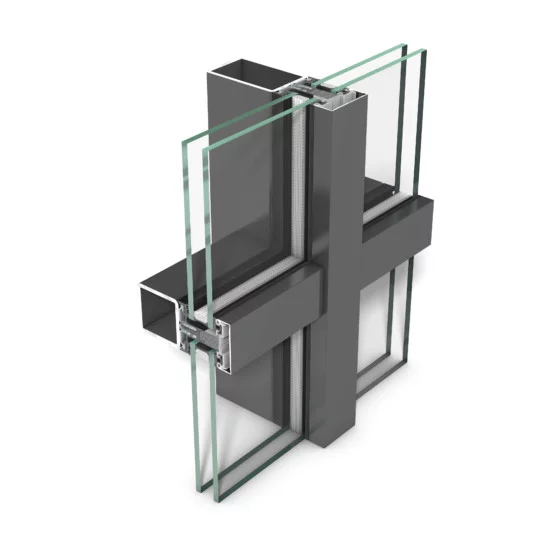
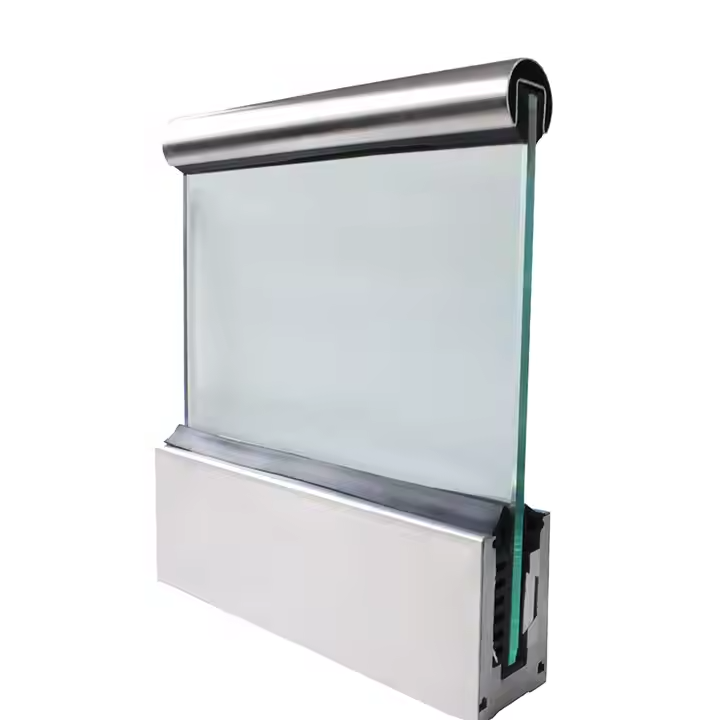
If you’re in the planning stage, APRO supplies custom aluminum door and window systems for commercial projects—curtain walls, storefronts, bi-fold and sliding systems—factory direct, with NFRC and CSA certifications.
How do you estimate the cost of a commercial building?
To estimate the cost of a commercial building:
Choose a cost per square foot based on the building type and region.
Multiply it by your building size (in square feet).
Add soft costs like design, permits, engineering, financing, and contingency.
Include site and utility costs if needed.
A simple formula is: Estimated cost = (cost per sq ft × building size) + soft costs + site costs.
This gives you a customized estimate rather than a generic number.
What is the average price per square foot for a commercial building?
On average in the U.S., commercial construction costs about $240 to $870 per square foot, depending on location and building type.
Smaller or simpler buildings fall near the low end, while high-end offices, hospitals, and luxury structures can exceed the high end.
How much to build a 4000 sq ft commercial building?
Using national averages:
At $240 per sq ft → ~$960,000
At $560 per sq ft (mid-range) → ~$2,240,000
At $870 per sq ft → ~$3,480,000
These figures are base construction costs only and don’t include soft costs (design, permits, financing, etc.)
What is the cheapest type of commercial building to build?
Warehouses and industrial buildings are typically the most affordable, starting around $100–$275 per sq ft. Their simple open layouts, minimal finishes, and standard structural systems keep costs lower than any other commercial building type.
How much does it cost to build a commercial building in California vs Texas?
California is one of the highest-cost states for commercial construction — expect to pay 20–40% more than the national average due to higher labor rates, stricter building codes, and urban site constraints.
Texas generally falls at or below the national average, with lower labor costs and fewer regulatory hurdles, making it one of the more cost-efficient markets for commercial development.
What percentage of commercial construction cost goes to windows and doors?
Windows, doors, and glazing systems typically account for 8–15% of total commercial construction costs, depending on the building type and facade design.
Glass-heavy buildings like office towers or retail storefronts sit toward the higher end, while warehouses and industrial facilities are at the lower end.
Choosing the right system early — such as aluminum curtain walls or storefront glazing — can meaningfully affect both upfront cost and long-term energy performance.
SPECIFICATION CHECKS
Specification checks for National Average Cost Benchmarks (2025–2026)
Confirm National Average Cost Benchmarks (2025–2026) from the current source or project schedule.
Record the page-specific context: When people ask about the cost per square foot of a commercial building, they’re usually looking for a realistic starting range — not a single number. The truth is, costs vary widely, but national benchmarks help set
Check Key Factors That Drive Cost Per Square Foot against the applicable drawing or evidence set.
Use the article to frame the decision, then verify the exact system configuration, test scope, drawing revision and local project requirements.
APPLICATION MAP
Where Commercial Building Cost per Square Foot Guide fits
Key Factors That Drive Cost Per Square Foot
For 2025–2026, most commercial construction projects in the U.S. fall roughly within these
Location & Geography
These figures typically include hard construction costs such as structure, materials, and labor. They may or may not include soft costs like design fees, permits, financing, and contingency
Building Type & Use
Think of these benchmarks as a planning tool, not a final quote. Your actual cost will depend heavily on where you build, what you build, and how complex the project
OPTION TRADE-OFFS
Trade-offs to review for Location & Geography
Location & Geography
These figures typically include hard construction costs such as structure, materials, and labor. They may or may not include soft costs like design fees, permits, financing, and contingency
Building Type & Use
Separate general guidance from project-specific dimensions, tests, codes and consultant decisions.
Decision boundary
Use the article to frame the decision, then verify the exact system configuration, test scope, drawing revision and local project requirements.
CLAIM / EVIDENCE
Claims and evidence on Commercial Building Cost per Square Foot Guide
Source statement
Think of these benchmarks as a planning tool, not a final quote. Your actual cost will depend heavily on where you build, what you build, and how complex the project
Evidence field
Retain the source route, section 'Building Type & Use', revision context and responsible reviewer.
Handoff
Continue to a product, evidence or contact page only after the unresolved inputs are listed.
NEXT ACTION PATHS
Next actions from Commercial Building Cost per Square Foot Guide
National Average Cost Benchmarks (2025–2026)
Several core factors determine where your project lands within the cost range. Understanding these early can help you avoid budget surprises
Key Factors That Drive Cost Per Square Foot
West Coast and major metro areas (such as California, New York, and the Northeast) often have higher labor rates, stricter codes, and higher material
Manage Consent
To provide the best experiences, we use technologies like cookies to store and/or access device information. Consenting to these technologies will allow us to process data such as browsing behavior or unique IDs on this site. Not consenting or withdrawing consent, may adversely affect certain features and functions.
Functional
Always active
The technical storage or access is strictly necessary for the legitimate purpose of enabling the use of a specific service explicitly requested by the subscriber or user, or for the sole purpose of carrying out the transmission of a communication over an electronic communications network.
Preferences
The technical storage or access is necessary for the legitimate purpose of storing preferences that are not requested by the subscriber or user.
Statistics
The technical storage or access that is used exclusively for statistical purposes.The technical storage or access that is used exclusively for anonymous statistical purposes. Without a subpoena, voluntary compliance on the part of your Internet Service Provider, or additional records from a third party, information stored or retrieved for this purpose alone cannot usually be used to identify you.
Marketing
The technical storage or access is required to create user profiles to send advertising, or to track the user on a website or across several websites for similar marketing purposes.