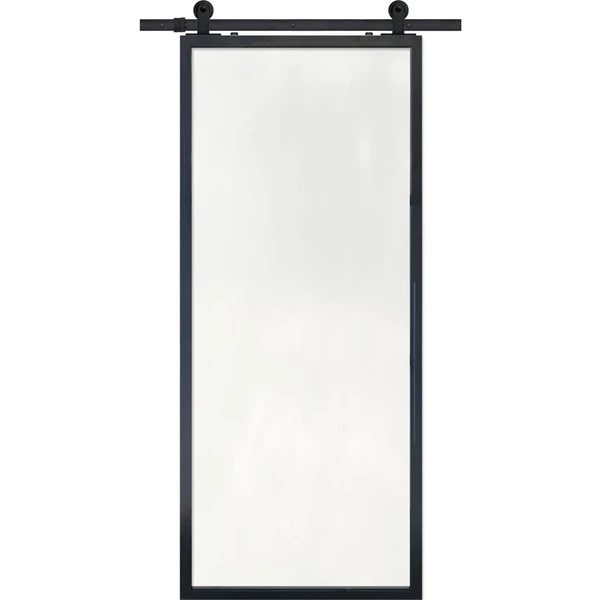
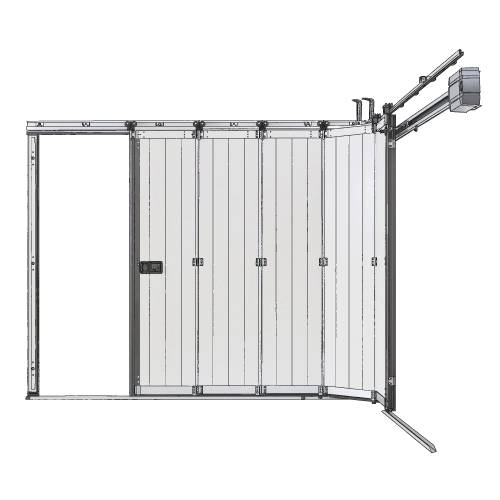
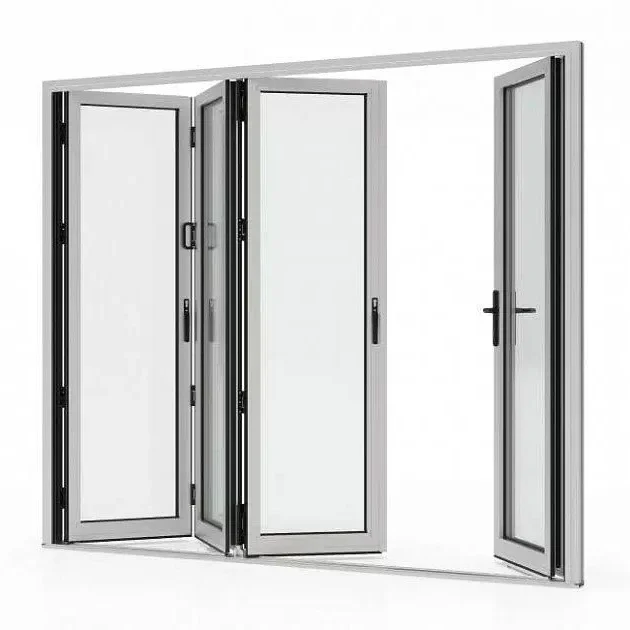
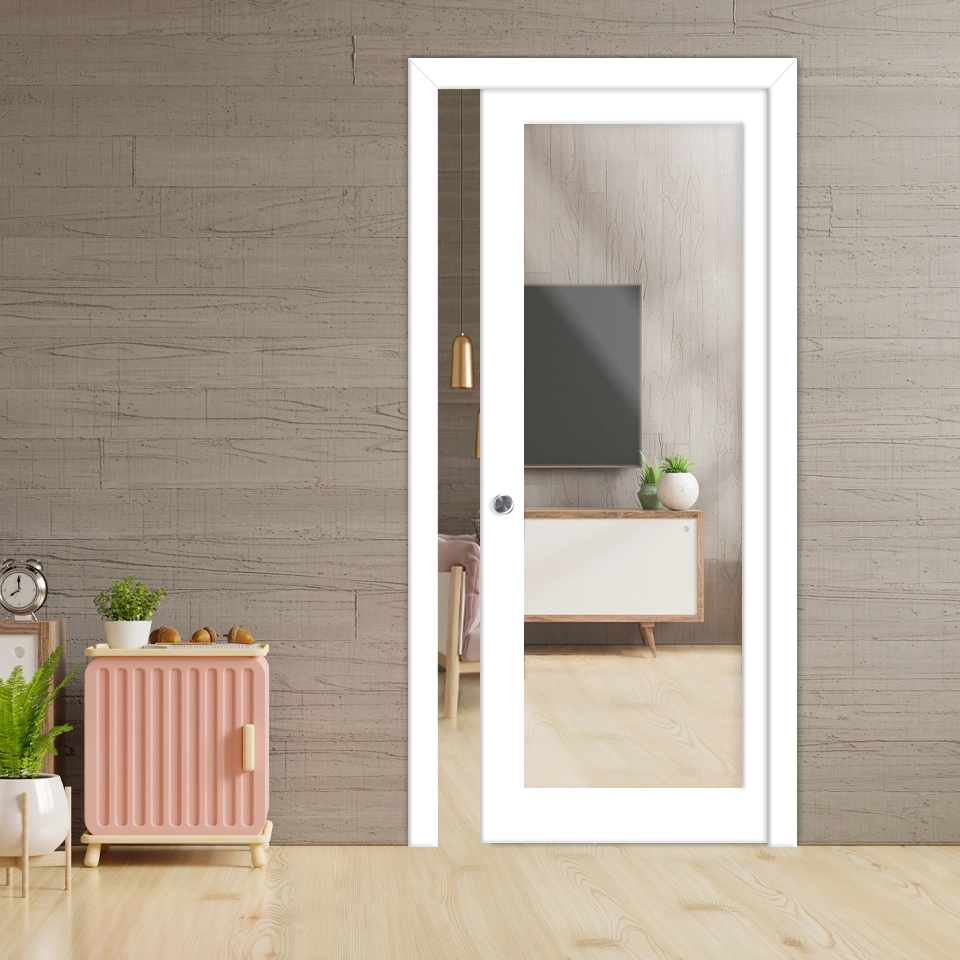
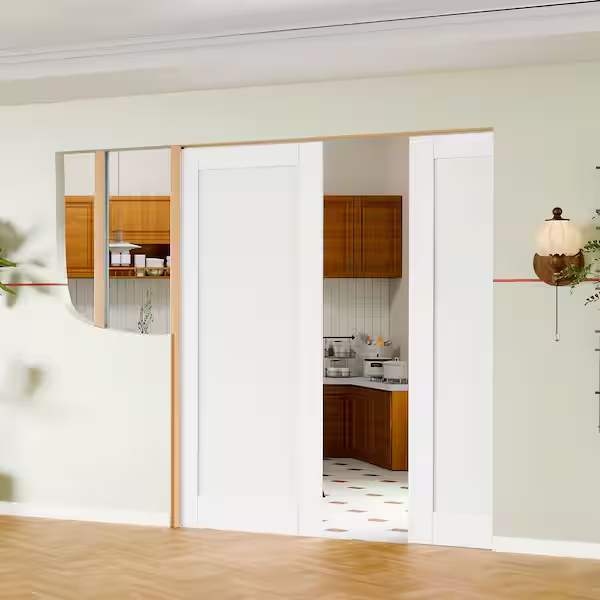
If you’re looking for smart ways to save space and add a modern touch to your home, pocket doors might be the perfect solution. Unlike traditional swinging doors that need extra room to open, pocket doors slide neatly into the wall, completely disappearing when open.
This simple but clever design is one of the reasons pocket doors are becoming more popular in today’s home designs. Whether you live in a small apartment or want a sleek, open-concept look in a larger home, pocket doors help you make the most of every inch of space. In fact, they can free up valuable wall and floor space that would otherwise be blocked by a swinging door.
What Is a Pocket Door?
A pocket door is a type of sliding door that completely disappears into a hidden compartment inside the wall when open. Instead of swinging out like a regular door or sliding along the outside of a wall like a barn door, a pocket door glides smoothly into the wall cavity — or “pocket” — which gives it its name.
This makes pocket doors especially useful in tight spaces where every inch counts. They allow you to keep the doorway completely clear when open, unlike standard sliding doors that stay visible along the wall.
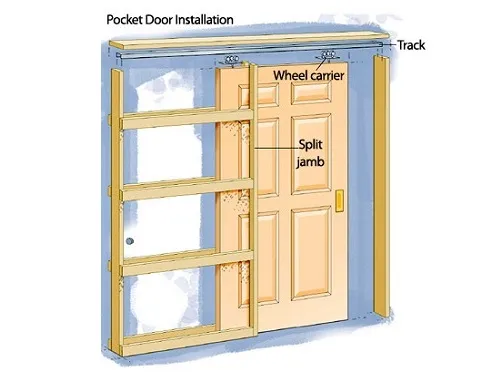
How Pocket Doors Work: The Key Parts
Door Slab: The actual door panel, which can be made of wood, glass, or other materials.
Track/Rail: A metal rail installed inside the wall, guiding the door as it slides.
Pocket Cavity: The hollow space inside the wall where the door disappears when fully open.
Hardware: Includes rollers, hangers, guides, and handles that ensure smooth sliding and easy operation.
Pros and Cons of Pocket Doors
Like any home feature, pocket doors come with both advantages and a few trade-offs.
✅ Pros of Pocket Doors
Saves Space: Since pocket doors slide into the wall, they don’t need any clearance to open or close. This makes them perfect for small rooms, tight hallways, and multi-use spaces where every inch matters.
Stylish & Customizable: Pocket doors offer a sleek, modern look that works with many interior styles. They can be customized with different materials, colors, and finishes to match your home’s design.
Accessible: Because they don’t swing open, pocket doors are often easier for people using wheelchairs, walkers, or mobility aids to navigate through doorways without obstruction.
Versatile Applications: Pocket doors work well in many areas of the home — bathrooms, bedrooms, closets, pantries, and even as room dividers for flexible open-plan living.
❌ Cons of Pocket Doors
Higher Installation Cost: Pocket doors typically cost more to install than traditional swing doors. The wall cavity needs to be built or modified to create space for the door to slide into.
Hardware Repairs Are More Complex: Because the track and rollers are hidden inside the wall, repairing or replacing hardware can be more difficult and sometimes requires opening up the wall.
May Be Harder to Operate for Some Users: Sliding doors may require more hand strength or dexterity to open and close compared to standard swing doors, especially if the hardware isn’t well-maintained.
Common Applications: Where Pocket Doors Work Best
One of the best things about pocket doors is their versatility. Thanks to their space-saving design, they can work in almost any room of your home.
1. Bathrooms (especially en-suites and Jack-and-Jill layouts)
Small bathrooms often don’t have space for a swinging door. Pocket doors make it easy to enter and exit without blocking sinks, toilets, or cabinets. They’re especially useful in Jack-and-Jill bathrooms shared between two bedrooms.
2. Bedrooms and Closets
Pocket doors are perfect for closets and wardrobes, where a swinging door might block furniture or make the space feel cramped. They also create a seamless look for bedrooms, keeping walkways clear.
3. Kitchens and Pantries
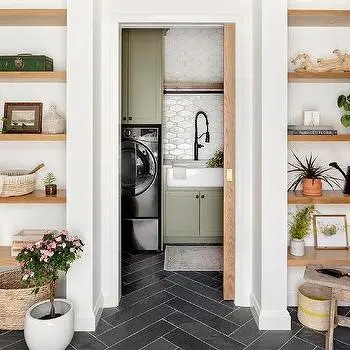
In kitchens, pocket doors help separate spaces like walk-in pantries, laundry areas, or dining rooms without sacrificing valuable floor space. They’re great for creating open flow between rooms while still offering privacy when needed.
4. Home Offices and Flexible Workspaces
Pocket doors are ideal for home offices where you need privacy during work hours but want an open feel at other times. Simply slide the door closed when you need quiet.
5. Laundry Rooms, Larders, and Walk-in Wardrobes
For smaller utility spaces, pocket doors keep traffic areas open and provide easy access without bumping into swinging doors.
6. Whole-House Consistency for Open Floor Plans
Many homeowners use pocket doors throughout the home for a cohesive design. They work beautifully in open-concept layouts where flexibility between open and closed spaces is key.
Pocket Door Types & Variations
Pocket doors aren’t one-size-fits-all. There are several types and variations to fit different spaces, styles, and needs.
Single vs. Double Pocket Doors
Single Pocket Doors:
These are perfect for smaller openings, like bathrooms, closets, or small bedrooms. Since they only slide into one side of the wall, they take up less cavity space and are easier to install.
Double Pocket Doors:
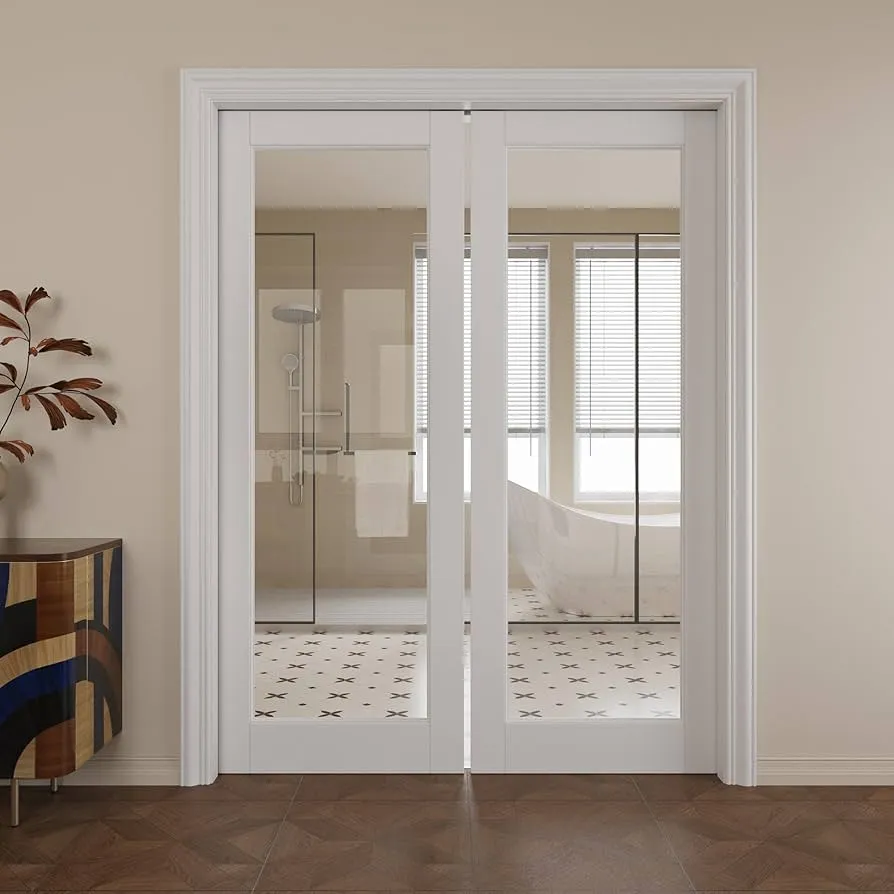
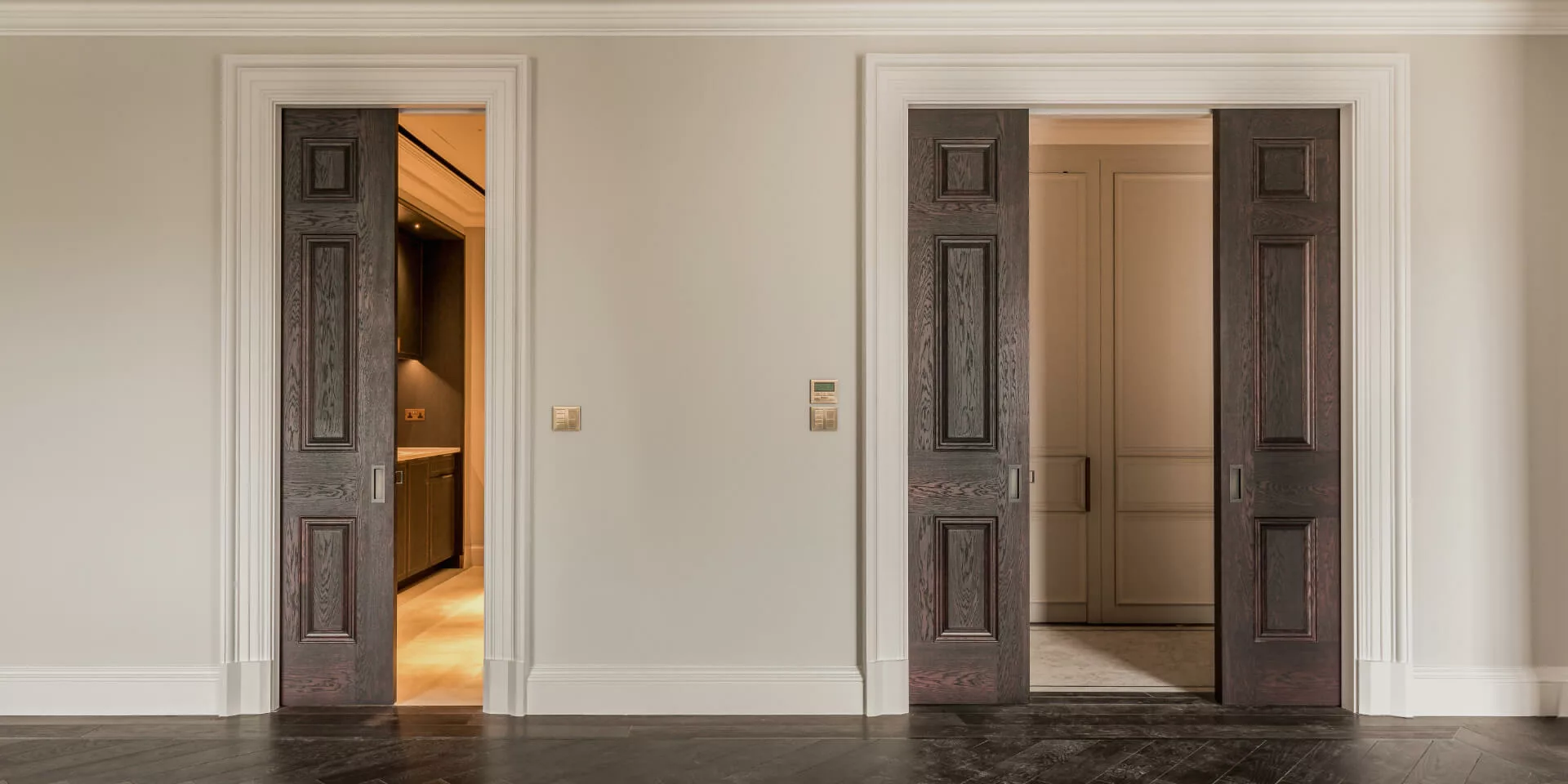
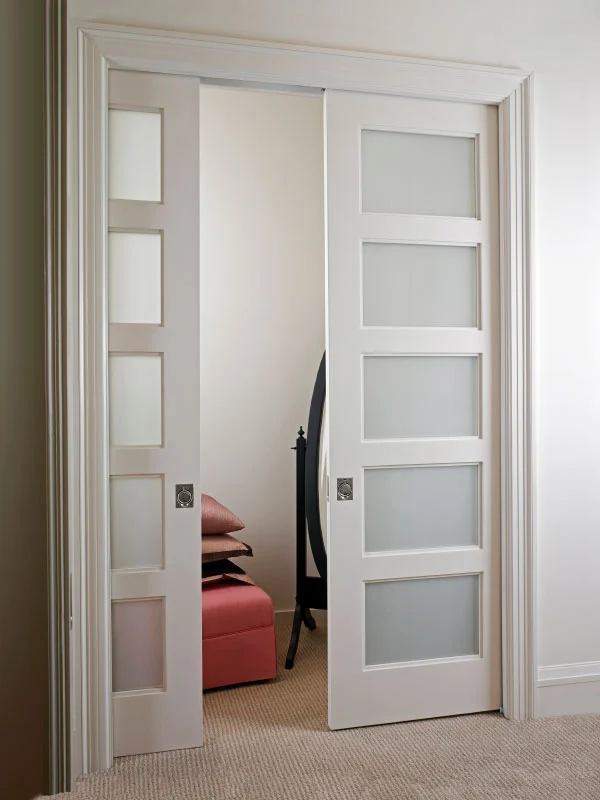
Ideal for wider openings, like living rooms, dining areas, or home offices that need flexible separation. Each door slides into its own wall cavity on either side, which means you’ll need extra wall space to accommodate both pockets.
Framed vs. Frameless Pocket Doors
Framed Pocket Doors:
These have trim or casing around the doorway, offering a more traditional, finished appearance. They blend well with classic or transitional home designs.
Frameless Pocket Doors:
Frameless doors slide directly into the wall without visible trim, creating a clean, minimalist look. This style is popular in modern and contemporary homes for its sleek, seamless appearance.
Soft-Close and Self-Closing Options
Modern pocket doors can be fitted with soft-close or self-closing mechanisms that gently pull the door shut without slamming. These features add convenience, reduce noise, and help protect the door and hardware over time.
Material Options for Pocket Doors
Pocket doors aren’t just about saving space — they can also add style and personality to your home. You’ll find plenty of material options to match your design tastes and needs:
1. Wood (Oak, Maple, etc.): Warm & Classic
Wood pocket doors bring natural beauty and warmth to any room. Options like oak, maple, and walnut fit well in traditional, rustic, or craftsman-style homes. Wood doors can also be stained or painted to match your interior décor.
2. Glass (Clear, Frosted, Etched): Light & Airy
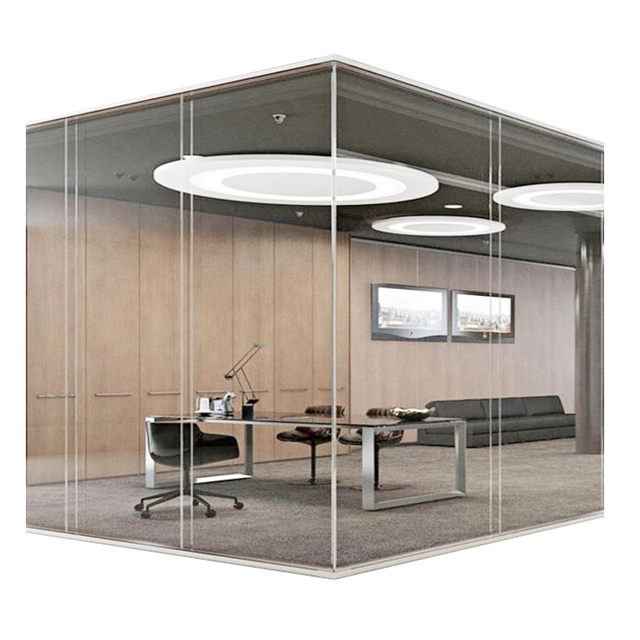
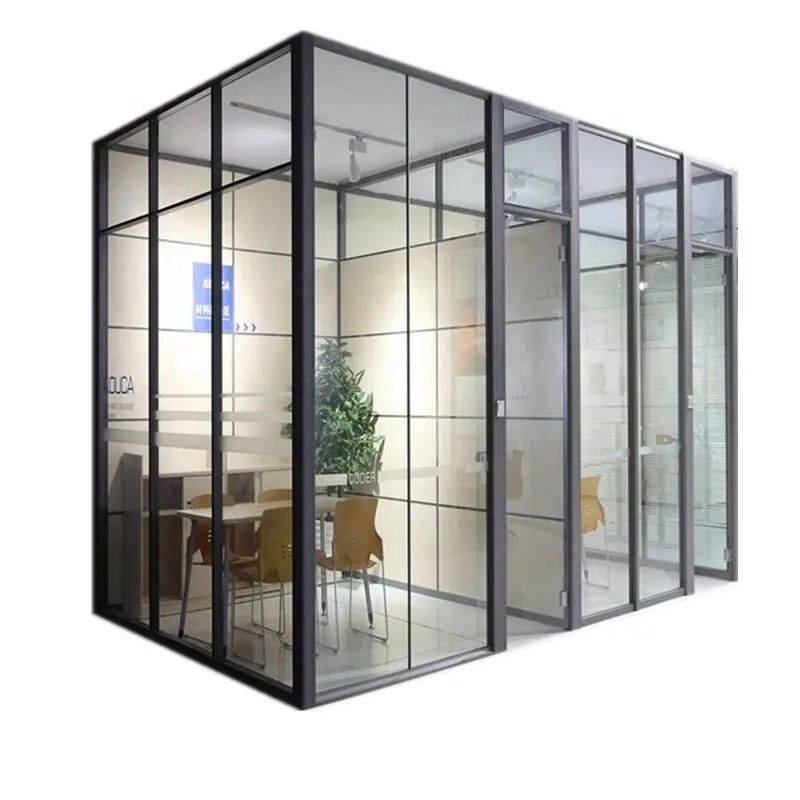
Glass pocket doors allow natural light to pass through while still creating a separation between rooms. Frosted or etched glass adds privacy while maintaining a bright, open feel — perfect for bathrooms, offices, or modern living spaces.
3. Mirror Panels: Reflective & Space-Expanding
Mirrored pocket doors are a smart solution for small rooms like bedrooms or walk-in closets. They reflect light, making the room feel larger and brighter, while also serving as a full-length mirror.
Laminate and composite materials offer a wide range of colors, patterns, and textures — from wood-look finishes to bold, modern designs. They’re durable, easy to maintain, and often more affordable than solid wood.
5. Metal and Hybrid Designs: Modern Industrial Appeal
For a sleek, contemporary look, metal or metal-accented pocket doors bring an industrial edge to your space. These hybrid designs combine metal frames with glass, wood, or composite panels for a unique, eye-catching finish.
How Pocket Doors Work
Pocket doors may look simple, but there’s some smart engineering behind their smooth operation. Here’s a quick breakdown of how they work:
The door slab — whether wood, glass, or other material — is mounted on rollers that glide along an overhead track installed inside the wall. As you slide the door open, it disappears into a hidden cavity (the “pocket”) built into the wall structure.
The key to a pocket door’s smooth movement is precise hardware and framing. The track must be perfectly level, and the wall cavity needs to be slightly wider than the door to allow it to slide freely without rubbing or sticking. Quality rollers, hangers, and guides keep the door stable and quiet as it moves.
When properly installed, the door slides effortlessly, completely clearing the doorway while staying hidden from view — creating that clean, modern look pocket doors are known for.
Installation Considerations
While pocket doors offer big benefits, getting them installed properly takes a bit more planning than a regular swing door.
1. Wall Framing
The wall must be framed to create a pocket cavity wide enough for the door slab to slide into. This cavity needs to be slightly larger than the door itself to allow smooth movement without rubbing.
2. Track Leveling
The overhead track must be perfectly level. Even a small tilt can cause the door to bind, stick, or slide unevenly. Precision here is critical for long-term performance.
3. Wall Depth Requirements
Pocket doors usually require at least 4 to 6 inches of wall depth to house both the door and the track. Thinner walls may need modifications or special pocket door systems.
4. Retrofitting Challenges
While you can add a pocket door to an existing wall, it involves opening up the wall, removing or rerouting any wiring, plumbing, or studs, and reframing to fit the pocket. This makes retrofitting more complex and often more expensive than installing during new construction.
5. Professional Installation Recommended
For larger doors, double pocket doors, or retrofits, hiring a professional installer is often the smartest choice. They’ll ensure the framing, hardware, and alignment are perfect from the start — saving you time, hassle, and costly repairs later.
Cost Considerations
While pocket doors offer plenty of design and space-saving benefits, it’s important to understand the costs involved before starting your project.
Higher Upfront Cost
Compared to regular swing doors, pocket doors typically cost more to install. The extra expense comes from:
Building the pocket cavity inside the wall
Specialized hardware like tracks, rollers, and guides
More labor-intensive framing and finishing work
Long-Term Value
Even though the initial cost is higher, many homeowners see pocket doors as a smart investment. By maximizing space efficiency, they allow for better room layouts, easier furniture placement, and a more open feel — especially valuable in small homes, apartments, or multi-functional spaces.
Retrofitting Costs
Adding pocket doors to an existing wall increases both the labor and cost. Walls often need to be opened up, existing wiring or plumbing may need rerouting, and new framing must be added to support the pocket cavity. This makes retrofitting significantly more expensive than installing pocket doors during new construction or remodeling.
Maintenance & Durability
When installed with quality materials, pocket doors can last for many years with minimal upkeep. However, like any moving part in your home, a little care goes a long way.
Use High-Quality Hardware
The track, rollers, and hardware are the heart of a pocket door system. Investing in high-quality track and rollers ensures smooth operation, reduces wear over time, and helps prevent frustrating issues like sticking or noisy sliding.
Preventative Care
Pocket doors generally don’t need much maintenance, but a few simple habits can keep them working their best:
Keep the track clean and free of dust or debris.
Occasionally check for loose hardware or minor alignment issues.
Gently operate the door — avoid slamming or forcing it open or closed.
Professional Repairs
If your pocket door starts sticking, coming off track, or if the hardware inside the wall fails, repairs can get tricky since the components are hidden. In these cases, professional repair may be required, especially if the wall needs to be opened to access the problem.
With proper installation and care, though, many homeowners enjoy years of smooth, quiet operation with very little trouble.
Need Help Choosing or Buying Doors?
Whether you’re planning a new build, remodeling, or just exploring ways to save space, pocket doors can be the perfect solution. From design options to proper installation, getting the right advice can make all the difference.
Contact us today to explore our door catalog, request a custom design, or get expert support for your project. Our team is here to help you create stylish, functional spaces that fit your needs and budget.
FAQs About Pocket Doors
Are pocket doors a good idea for small spaces?
Yes. Pocket doors are one of the best space-saving door solutions because they slide into the wall instead of swinging open. They work especially well in small bathrooms, closets, laundry rooms, and apartments where floor space is limited.
Can pocket doors be installed in existing walls?
Yes, pocket doors can be retrofitted into existing walls, but the process is more complex than standard door installation. The wall usually needs to be opened to create the pocket cavity, and plumbing or electrical lines may need to be relocated.
Do pocket doors lock?
Yes. Many pocket doors can be fitted with privacy locks, making them suitable for bathrooms, bedrooms, and home offices. There are also soft-close and self-latching hardware options available.
What materials are available for pocket doors?
Pocket doors come in many materials, including solid wood, glass, frosted glass, mirror panels, laminate, composite materials, and metal-frame designs. This makes it easy to match both modern and traditional interiors.
What is the difference between a pocket door and a barn door?
A pocket door slides inside the wall and completely disappears when open, while a barn door slides along the outside of the wall and remains visible. Pocket doors save more space and provide a cleaner, more seamless look.
Where are pocket doors most commonly used?
Pocket doors are commonly used in bathrooms, closets, pantries, laundry rooms, bedrooms, home offices, and open-plan living spaces where maximizing usable space is important.
Yes. Pocket doors are one of the best space-saving door solutions because they slide into the wall instead of swinging open. They work especially well in small bathrooms, closets, laundry rooms, and apartments where floor space is limited.
Yes, pocket doors can be retrofitted into existing walls, but the process is more complex than standard door installation. The wall usually needs to be opened to create the pocket cavity, and plumbing or electrical lines may need to be relocated.
Yes. Many pocket doors can be fitted with privacy locks, making them suitable for bathrooms, bedrooms, and home offices. There are also soft-close and self-latching hardware options available.
Pocket doors come in many materials, including solid wood, glass, frosted glass, mirror panels, laminate, composite materials, and metal-frame designs. This makes it easy to match both modern and traditional interiors.
A pocket door slides inside the wall and completely disappears when open, while a barn door slides along the outside of the wall and remains visible. Pocket doors save more space and provide a cleaner, more seamless look.
Pocket doors are commonly used in bathrooms, closets, pantries, laundry rooms, bedrooms, home offices, and open-plan living spaces where maximizing usable space is important.
PERFORMANCE BOUNDARY
Performance boundaries around What Is a Pocket Door?
If you’re looking for smart ways to save space and add a modern touch to your home, pocket doors might be the perfect solution. Unlike traditional swinging doors that need extra room to open, pocket doors slide neatly into the wall, completely disappearing…
Treat What Is a Pocket Door? as page context, not universal project proof.
Verify How Pocket Doors Work: The Key Parts for the proposed configuration.
Use the article to frame the decision, then verify the exact system configuration, test scope, drawing revision and local project requirements.
QUOTATION INPUTS
Quotation inputs for How Pocket Doors Work: The Key Parts
Confirm How Pocket Doors Work: The Key Parts from the current source or project schedule.
Record the page-specific context: This simple but clever design is one of the reasons pocket doors are becoming more popular in today’s home designs. Whether you live in a small apartment or want a sleek, open-concept look in a larger home, pocket doors help you make the most of every inch of…
Check Pros and Cons of Pocket Doors against the applicable drawing or evidence set.
Use the article to frame the decision, then verify the exact system configuration, test scope, drawing revision and local project requirements.
OPTION TRADE-OFFS
Trade-offs to review for Pros and Cons of Pocket Doors
Pros and Cons of Pocket Doors
A pocket door is a type of sliding door that completely disappears into a hidden compartment inside the wall when open. Instead of swinging out like a regular door or sliding along the outside of a wall like a barn door, a pocket door glides smoothly into the…
✅ Pros of Pocket Doors
Separate general guidance from project-specific dimensions, tests, codes and consultant decisions.
Decision boundary
Use the article to frame the decision, then verify the exact system configuration, test scope, drawing revision and local project requirements.
FAILURE SIGNALS
Warning signs when reviewing ✅ Pros of Pocket Doors
Mismatch signal
The project input for ✅ Pros of Pocket Doors is absent or differs from the source context.
Control
Continue to a product, evidence or contact page only after the unresolved inputs are listed.
Stop condition
Use the article to frame the decision, then verify the exact system configuration, test scope, drawing revision and local project requirements.
PROJECT HANDOFF
What to hand off after reading What Is a Pocket Door? Space-Saving Door Solution
Source statement
Door Slab: The actual door panel, which can be made of wood, glass, or other
Evidence field
Retain the source route, section 'What Is a Pocket Door?', revision context and responsible reviewer.
Handoff
Use What Is a Pocket Door? Space-Saving Door Solution to define the decision and the questions that must be resolved.
Manage Consent
To provide the best experiences, we use technologies like cookies to store and/or access device information. Consenting to these technologies will allow us to process data such as browsing behavior or unique IDs on this site. Not consenting or withdrawing consent, may adversely affect certain features and functions.
Functional
Always active
The technical storage or access is strictly necessary for the legitimate purpose of enabling the use of a specific service explicitly requested by the subscriber or user, or for the sole purpose of carrying out the transmission of a communication over an electronic communications network.
Preferences
The technical storage or access is necessary for the legitimate purpose of storing preferences that are not requested by the subscriber or user.
Statistics
The technical storage or access that is used exclusively for statistical purposes.The technical storage or access that is used exclusively for anonymous statistical purposes. Without a subpoena, voluntary compliance on the part of your Internet Service Provider, or additional records from a third party, information stored or retrieved for this purpose alone cannot usually be used to identify you.
Marketing
The technical storage or access is required to create user profiles to send advertising, or to track the user on a website or across several websites for similar marketing purposes.