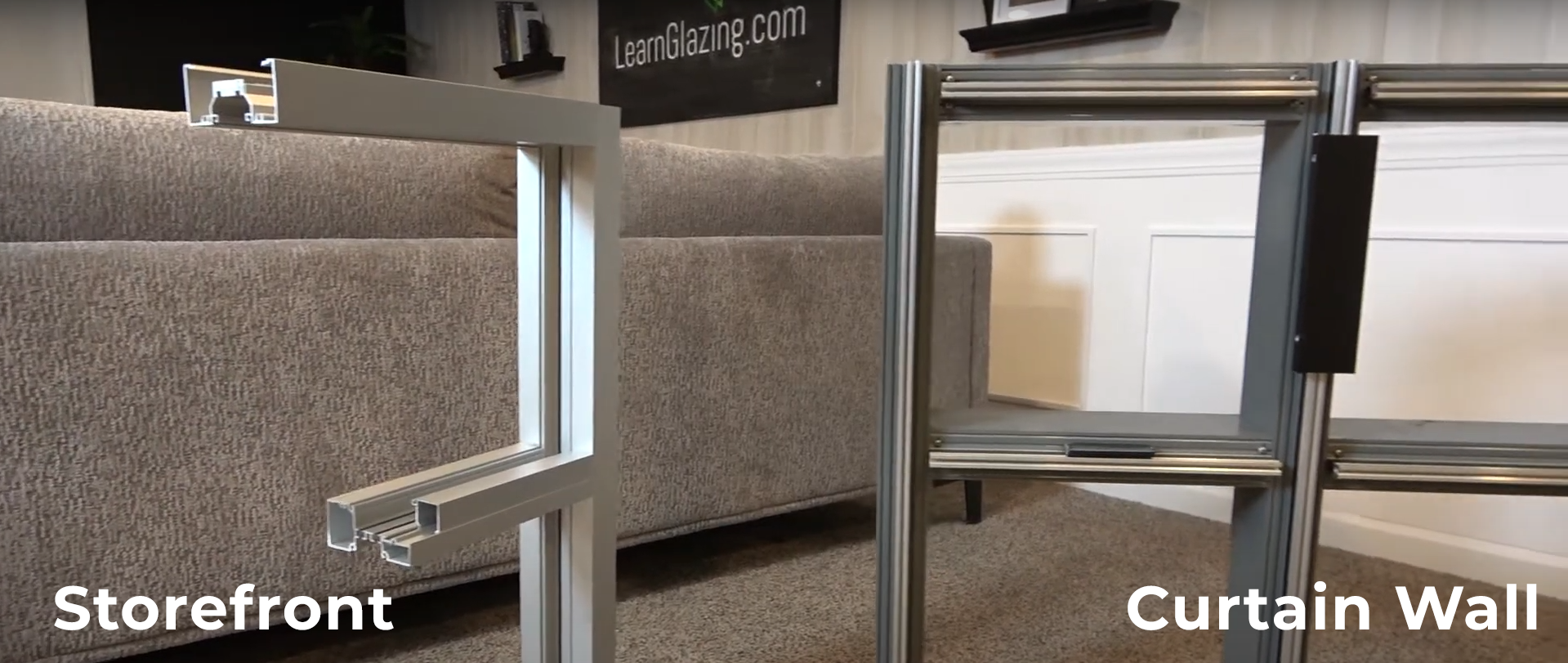
If you’re planning a commercial building, you’ve probably heard about curtain walls and storefronts. They might seem similar at first, but they serve very different purposes.
Choosing the right one can impact your building’s appearance, durability, energy efficiency, and cost.

In this guide, we’ll break down everything you need to know about curtain walls vs. storefronts.
We’ll cover how they’re built, where they work best, their pros and cons, and how to choose the right one.
Let’s get started!
What Is a Storefront System?

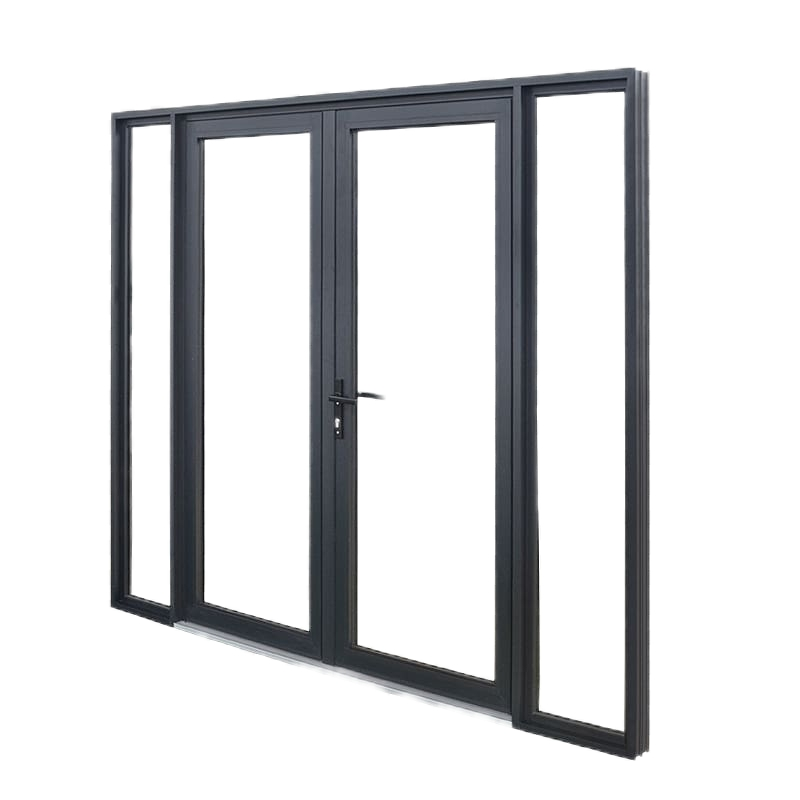
A storefront system is a non-load-bearing glass wall system designed mainly for ground-level commercial spaces.
You’ll often see it in retail stores, restaurants, and small office buildings.
It’s built to provide maximum visibility, allowing businesses to showcase their products and create an inviting entrance.
How Storefront Systems Are Built
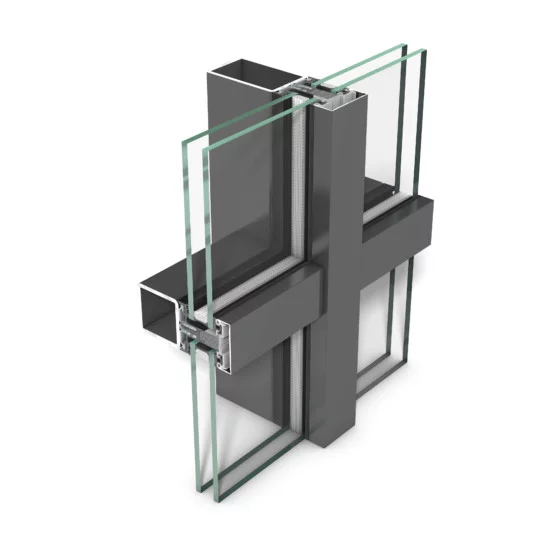
Storefronts are usually made with aluminum frames and large glass panels.
They’re installed between the floors of a building and anchored at the head and sill.
The glass can be front, center, or back glazed, depending on the design needs.
Where Are Storefront Systems Used?
- Retail stores – Large glass panels give businesses maximum visibility.
- Restaurants & cafés – Creates a bright, open feel that attracts customers.
- Small office buildings – Used in ground-floor lobbies or entrances.
Pros & Cons of Storefront Systems
✅ Cost-effective – More affordable than curtain walls.
✅ Quick to install – Prefabricated frames make it an easy setup.
✅ Great visibility – Ideal for businesses that rely on foot traffic.
❌ Limited height – Best for buildings up to 10-12 feet.
❌ Less weather-resistant – Water drains at the bottom, which can lead to issues in heavy rain.
❌ Not highly insulated – Doesn’t provide the same energy efficiency as other systems.
What Is a Curtain Wall System?

A curtain wall system is a non-load-bearing exterior wall that typically spans multiple floors.
It’s commonly used in mid-to-high-rise buildings like office towers, hotels, and large commercial buildings.
Unlike storefront systems, curtain walls are designed to hang from the structure rather than relying on the floors for support.
How Curtain Wall Systems Are Built
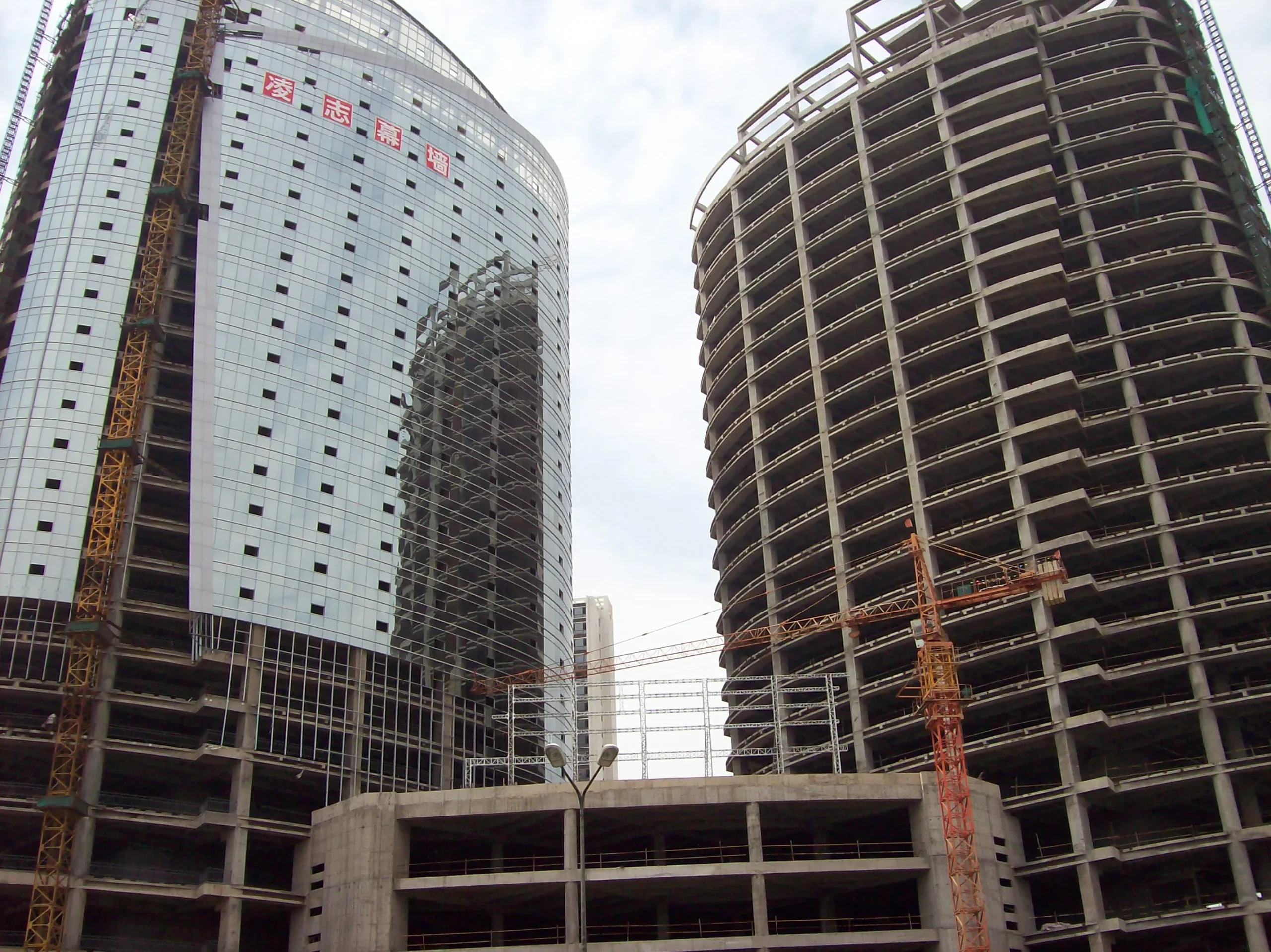
Curtain walls are built to hang off the building’s frame.
They use structural silicone, pressure plates, and gaskets to seal the system and prevent air and water infiltration.
Water is drained at each horizontal mullion, which helps avoid overload issues in heavy rain or extreme weather.
These systems can be made using either stick-built or unitized (modular) methods, depending on the project requirements.
Stick-built systems are constructed on-site, while unitized systems are pre-fabricated and assembled off-site before being lifted into place.
Where Are Curtain Wall Systems Used?
- Office towers – Spanning multiple stories for a sleek, modern look.
- Hotels – Offering extensive window space and great views.
- Large commercial buildings – Enhancing the building’s energy efficiency and aesthetic appeal.
Pros & Cons of Curtain Wall Systems
✅ Spans multiple stories – Perfect for tall buildings.
✅ Superior weather resistance – Handles harsh weather conditions with ease.
✅ Thermal insulation – Helps keep buildings energy efficient.
❌ Higher initial cost – More expensive than storefront systems due to material and installation costs.
❌ Complex installation – Requires specialized labor and can take more time to set up.
❌ Maintenance – Needs regular upkeep to ensure it performs optimally over time.
Key Differences: Curtain Wall vs. Storefront