A BAL rating tells a supplier which bushfire construction requirements apply to a window opening — it does not tell a project buyer whether the drawings, glass configuration, and quotation are actually aligned to that rating. That gap is where most delays happen.
Quotation accuracy on a commercial window or facade project usually depends on drawings, schedules, glass specifications, finish, hardware, and delivery assumptions being confirmed together, not treated as separate conversations.
This guide sets out a structured way for contractors, dealers, and distributors to review BAL rated aluminum windows before comparing suppliers or requesting pricing. It focuses on what to confirm, what to prepare, and what risks to avoid — not general product information you can already find in a catalog.
Problem: Why Project Buyers Lose Control
In short: Project buyers lose control of BAL rated aluminum window procurement when scope, compliance documentation, and quotation assumptions are confirmed separately instead of together — leading to mismatched specifications, unverifiable compliance claims, and pricing that changes late in the project.
This isn’t usually a supplier capability problem. It’s a sequencing problem.
Where scope and compliance drift apart
Drawings get issued before the BAL assessment is finalized. Glass and framing details get selected before a fire engineer confirms whether a Deemed-to-Satisfy solution or a tested system applies.
By the time a quotation request goes out, the window schedule and the compliance requirement may no longer describe the same product.
Drawings issued without a confirmed BAL rating for the site
Glass or mesh specifications selected before the compliance pathway is confirmed
Quotations requested against a schedule that hasn’t been checked against AS 3959 or AS 2047
Treating a supplier’s compliance statement as confirmed without independently checking the test report number, scope, and issue date
Why this matters for the project timeline
Each of these gaps is recoverable early and expensive late. A specification mismatch caught before production is a revision. The same mismatch caught after fabrication is a delay, a rework cost, or a consultant rejection at inspection.
The BAL Rated Aluminum Windows Supplier Review Framework
In short: A structured three-step review — confirming scope, checking technical and compliance requirements, and reviewing quotation and delivery assumptions — helps project buyers avoid the specification drift described above before a supplier is selected.
The sequence matters more than any individual step. Reviewing compliance before scope is confirmed, or requesting pricing before compliance is checked, is what creates the gaps project buyers run into later.
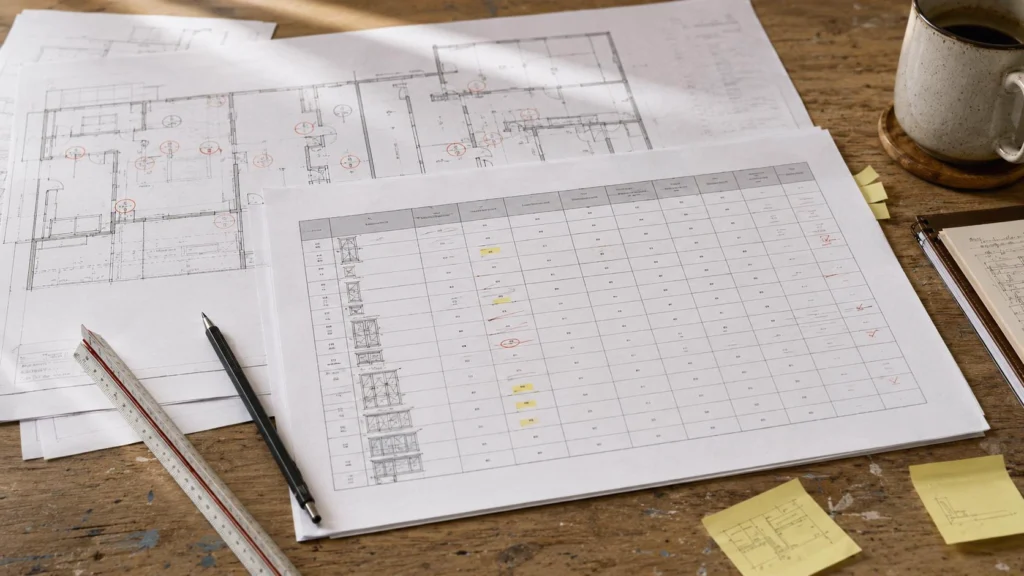
Step 1 — Confirm scope and drawings: lock the schedule, quantities, and locations before anything else moves forward.
Step 2 — Check technical and compliance requirements: verify the BAL pathway and structural requirements against the confirmed scope.
Step 3 — Review quotation and delivery assumptions: request pricing only once scope and compliance are aligned.
This is a review sequence, not a proprietary certification process — it reflects how documentation-based project support should work for any BAL rated aluminum window order.
Framework Step 1: Confirm Scope and Drawings
In short: Before requesting quotations, confirm the window and door schedule, drawings, glass configuration, finish, hardware, and quantities match the site’s actual BAL rating and building type.
Confirm the site’s BAL rating. BAL ratings (BAL-12.5 through BAL-40, and BAL-FZ in flame zone conditions) are assigned per site under AS 3959 based on vegetation classification and distance to the building. Confirm the current, project-specific rating rather than assuming a default.
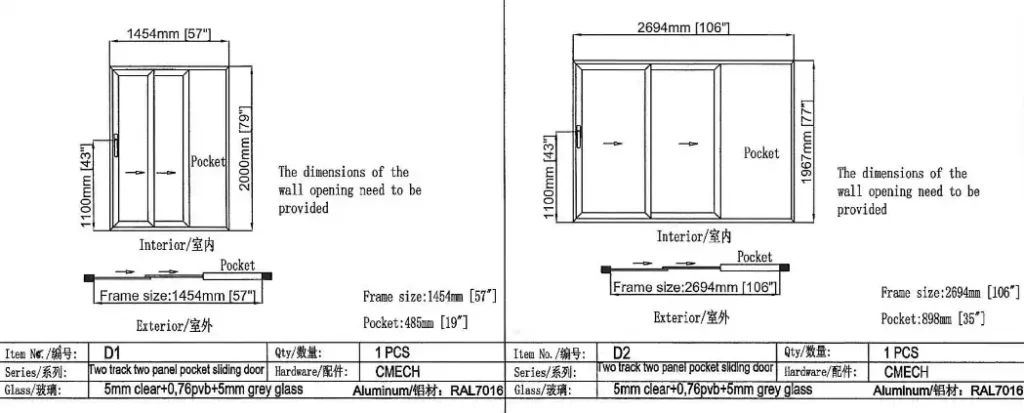
Match the schedule to the rating. Each opening on the window and door schedule should reflect the BAL classification that applies to that location on the building — ratings can vary across a single facade.
Confirm glass and framing intent. Note whether each opening is intended to use a Deemed-to-Satisfy detail or a tested system, since this affects what documentation the supplier will need to provide later.
Lock quantities before requesting quotes. Revisions after quotation are normal, but starting from a confirmed schedule reduces avoidable pricing changes.
Why this step gets skipped
Drawings are often issued on a project timeline that doesn’t wait for a finalized bushfire assessment. Confirming scope at this stage — even informally — gives the rest of the review something stable to check against.
For the underlying window and door products referenced in the schedule, see APRO’s aluminum window systems overview.
Framework Step 2: Check Technical and Compliance Requirements
In short: BAL compliance and structural or weatherproofing compliance (AS 2047) are separate requirements that must be checked independently — a BAL rating alone does not confirm wind load, water, or air infiltration performance.
Compliance requirements vary by market, project type, and local consultant expectations, so treat the table below as a starting checklist, not a substitute for local verification.
What to Verify
Why It Matters
Who Should Confirm It
BAL rating for the specific site
Determines which AS 3959 construction requirements apply
Bushfire consultant or certifier
Compliance pathway used (Deemed-to-Satisfy or tested system)
Determines what documentation the supplier needs to provide
Supplier, verified against AS 3959
Test report scope, if a tested system is used
A report only applies if the product configuration matches what was tested
Buyer, checking report number, issue date, and scope
Structural and weatherproofing performance under AS 2047
Addresses wind load and weather performance, separate from bushfire requirements
Project engineer or consultant
Whether BAL-FZ applies
BAL-FZ generally requires specialized fire-rated glazing or shutters beyond standard BAL-40 detailing
Bushfire consultant
Why a supplier’s compliance claim needs a second look
A supplier stating that a product “meets BAL-40” is not the same as providing a test report that names the exact glass, frame, and mesh configuration ordered.
Ask for the report number, issue date, issuing body, and product scope before treating any compliance claim as confirmed. Depending on project requirements, buyers may need to request this documentation directly rather than assume it will be provided by default.
Framework Step 3: Review Quotation and Delivery Assumptions
In short: A quotation for BAL rated aluminum windows should be requested only after scope and compliance requirements are confirmed, and should clearly state the delivery, installation, and documentation assumptions it is based on.
Request quotations against the confirmed schedule, not an early draft, to reduce pricing changes later in the project.
Ask what the quotation assumes about compliance documentation — whether test reports or certificates are included, and what they cover.
Confirm delivery assumptions, including project location, staging requirements, and any dependencies on drawing sign-off.
Clarify finish and hardware scope separately from the glazing and framing pricing, since these are often quoted with different lead-time assumptions.
Ask what happens if the schedule changes after quotation, so cost and timeline impact are understood before they occur.
A quotation that skips these points isn’t necessarily wrong — it’s just incomplete for a project buyer’s purposes. This is also a natural point to involve a supplier’s project support team directly, before committing to a production schedule.
Anonymized Project Context
In short: Across bushfire-affected commercial and multi-residential projects, the recurring pattern is not a lack of BAL-rated product options — it’s a lack of alignment between the confirmed BAL rating, the issued drawings, and the quotation scope.
Without naming specific projects or clients, the pattern generally shows up in a few consistent ways:
Openings on a schedule that don’t specify which BAL pathway (Deemed-to-Satisfy or tested system) applies
Quotations requested before a fire consultant has confirmed the final rating
Compliance documentation requested only after production has started, rather than during scope confirmation
Each of these is avoidable with the review sequence above. None of them reflects a shortage of compliant product — they reflect timing.
Risk Control Logic
In short: Reducing risk on BAL rated aluminum window projects comes from sequencing documentation correctly — confirming scope, then compliance, then quotation — rather than trying to compress all three into a single request.
Documentation risk: Requesting compliance documents at scope confirmation, not after production, gives time to resolve gaps without affecting the schedule.
Supplier coordination risk: A supplier that asks clarifying questions about BAL pathway and glass configuration is generally easier to coordinate with than one that quotes without asking.
Delivery risk: Delivery and installation readiness should be confirmed alongside compliance, since a compliant product delivered without coordinated installation access creates its own delays.
Compliance-claim risk: Treat any compliance statement without a traceable report number, issue date, and scope as unverified until confirmed.
How Project Buyers Can Apply the Framework
In short: Apply the framework by working through it in order — confirm scope, check compliance, then request quotations — and use it as a shared checklist with your supplier rather than a one-sided review.
Confirm the BAL rating and finalize the window and door schedule.
Identify which openings use a Deemed-to-Satisfy detail versus a tested system.
Request compliance documentation and check report scope before accepting it.
Confirm AS 2047 structural and weatherproofing requirements separately from BAL compliance.
Send the confirmed scope, compliance requirements, and project details to your supplier for quotation.
Review the quotation’s delivery and documentation assumptions before approving production.
Working through these steps with a supplier — rather than handing over a schedule and waiting for a price — is generally what separates a controlled BAL rated window procurement from one that runs into late-stage surprises.
FAQ
What is the minimum glass requirement for BAL-40 rated aluminum windows under AS 3959?
AS 3959 sets construction requirements for glazing and framing at BAL-40 based on radiant heat and ember exposure, but the exact glass specification — thickness, toughened versus laminated, and any mesh screening — depends on whether a Deemed-to-Satisfy detail or a tested system is used. This should be confirmed against the current edition of AS 3959 and any project-specific fire engineering report before finalizing the schedule.
What is the difference between “Deemed to Satisfy” and a “Tested System” for BAL aluminum windows?
A Deemed-to-Satisfy solution follows prescribed construction methods set out in AS 3959 without requiring separate lab testing, but the detail must be followed exactly as specified. A tested system is validated through bushfire simulation testing and can offer more design flexibility, but it requires a traceable test report that matches the exact product configuration being ordered.
How does BAL-40 differ from BAL-FZ (Flame Zone) for window specifications?
BAL-FZ is the highest and most stringent classification under AS 3959 and generally requires specialized fire-rated glazing or shutters, going beyond standard BAL-40 detailing. Project buyers working in flame zone conditions should treat BAL-FZ as a distinct compliance pathway rather than an extension of BAL-40, and confirm requirements with a bushfire consultant early.
Does a BAL-40 rating automatically guarantee compliance with AS 2047 structural wind loads?
No. BAL rating and AS 2047 structural and weatherproofing performance address different hazards — bushfire exposure versus wind load and weather performance — and must be confirmed independently. A product compliant with BAL-40 still needs its structural and weatherproofing performance verified separately against the project’s wind classification.
Which of these three review steps should be completed before contacting a supplier for pricing?
Steps 1 and 2 — confirming scope and drawings, then checking the BAL pathway and AS 2047 requirements — should both be settled before a quotation is requested. Asking for pricing while either step is still open is one of the most common reasons a quotation later needs revision.
Why does the order of these three steps matter more than comparing unit prices first?
Comparing prices before scope and compliance are confirmed means suppliers are pricing different, unstated assumptions rather than the same project. Confirming scope and compliance first gives every supplier the same information to quote against, so price comparisons become meaningful rather than misleading.
Which compliance requirements should be checked for aluminum windows in bushfire-prone areas?
At minimum, confirm the BAL rating and applicable AS 3959 requirements, structural and weatherproofing performance under AS 2047, and any additional consultant or certifier requirements specific to the project. Requirements vary by market, state, and project type, so local confirmation is necessary in every case.
Conclusion / What to Do Next
The most reliable way to move a BAL rated aluminum window project forward is to confirm scope, then compliance, then quotation — in that order. Skipping ahead to pricing before the schedule and compliance pathway are settled is the most common source of delay and rework on these projects.
Before requesting a project review or quotation, prepare:
Window and door schedule with confirmed BAL rating per opening
Drawings, including glass and framing configuration
Finish and hardware requirements
Project location and applicable compliance pathway (Deemed-to-Satisfy or tested system)
Delivery assumptions and any installation timing constraints
Any existing compliance documentation to be reviewed or verified
Once these are ready, they give a supplier what’s needed to quote accurately the first time, rather than revising pricing after production has already started.
CTA
For BAL rated aluminum windows project review or quotation support, send APRO your drawings, window and door schedule, glass and framing specifications, finish and hardware requirements, project location, delivery assumptions, and quotation scope. This lets the review focus on confirming your specific requirements rather than starting from a generic product discussion.
SPECIFICATION CHECKS
Specification checks for Introduction
Confirm Introduction from the current source or project schedule.
Record the page-specific context: A BAL rating tells a supplier which bushfire construction requirements apply to a window opening — it does not tell a project buyer whether the drawings, glass configuration, and quotation are actually aligned to that rating. That gap is where most delays…
Check Problem: Why Project Buyers Lose Control against the applicable drawing or evidence set.
Use the article to frame the decision, then verify the exact system configuration, test scope, drawing revision and local project requirements.
LIFECYCLE VIEW
Lifecycle questions for Stop BAL Rated Window Quotation Delays: 3 Steps
1Cross-check the article against the source sections on Introduction and Problem: Why Project Buyers Lose Control.
2Review Problem: Why Project Buyers Lose Control.
3Cross-check Where scope and compliance drift apart.
4Use the article to frame the decision, then verify the exact system configuration, test scope, drawing revision and local project requirements.
PROJECT ROLES
Project responsibilities around Where scope and compliance drift apart
Where scope and compliance drift apart
This guide sets out a structured way for contractors, dealers, and distributors to review BAL rated aluminum windows before comparing suppliers or requesting pricing. It focuses on what to confirm, what to prepare, and what risks to avoid — not general…
Why this matters for the project timeline
In short: Project buyers lose control of BAL rated aluminum window procurement when scope, compliance documentation, and quotation assumptions are confirmed separately instead of together — leading to mismatched specifications, unverifiable compliance claims,…
Introduction
This isn’t usually a supplier capability problem. It’s a sequencing
PROCESS SEQUENCE
Process sequence found on Stop BAL Rated Window Quotation Delays: 3 Steps
1Continue to a product, evidence or contact page only after the unresolved inputs are listed.
2Review Why this matters for the project timeline.
3Cross-check Introduction.
4Use the article to frame the decision, then verify the exact system configuration, test scope, drawing revision and local project requirements.
MEDIA CONTEXT
What the page media shows about Introduction
Introduction
This isn’t usually a supplier capability problem. It’s a sequencing
Problem: Why Project Buyers Lose Control
Drawings get issued before the BAL assessment is finalized. Glass and framing details get selected before a fire engineer confirms whether a Deemed-to-Satisfy solution or a tested system
Where scope and compliance drift apart
By the time a quotation request goes out, the window schedule and the compliance requirement may no longer describe the same
Existing source inventory: 11 images and 23 headings. This count describes the captured page; it does not add a product claim.
Manage Consent
To provide the best experiences, we use technologies like cookies to store and/or access device information. Consenting to these technologies will allow us to process data such as browsing behavior or unique IDs on this site. Not consenting or withdrawing consent, may adversely affect certain features and functions.
Functional
Always active
The technical storage or access is strictly necessary for the legitimate purpose of enabling the use of a specific service explicitly requested by the subscriber or user, or for the sole purpose of carrying out the transmission of a communication over an electronic communications network.
Preferences
The technical storage or access is necessary for the legitimate purpose of storing preferences that are not requested by the subscriber or user.
Statistics
The technical storage or access that is used exclusively for statistical purposes.The technical storage or access that is used exclusively for anonymous statistical purposes. Without a subpoena, voluntary compliance on the part of your Internet Service Provider, or additional records from a third party, information stored or retrieved for this purpose alone cannot usually be used to identify you.
Marketing
The technical storage or access is required to create user profiles to send advertising, or to track the user on a website or across several websites for similar marketing purposes.