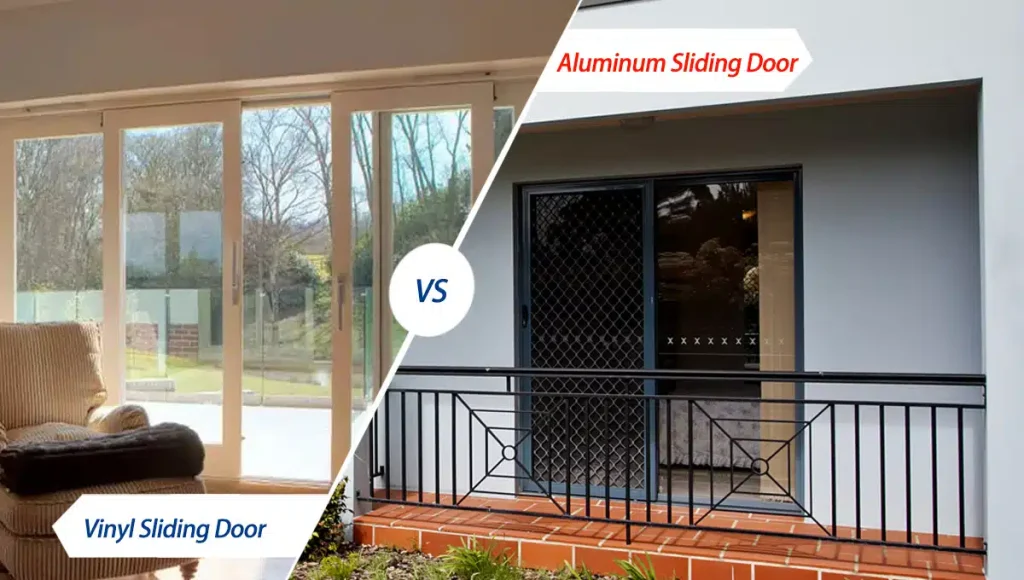
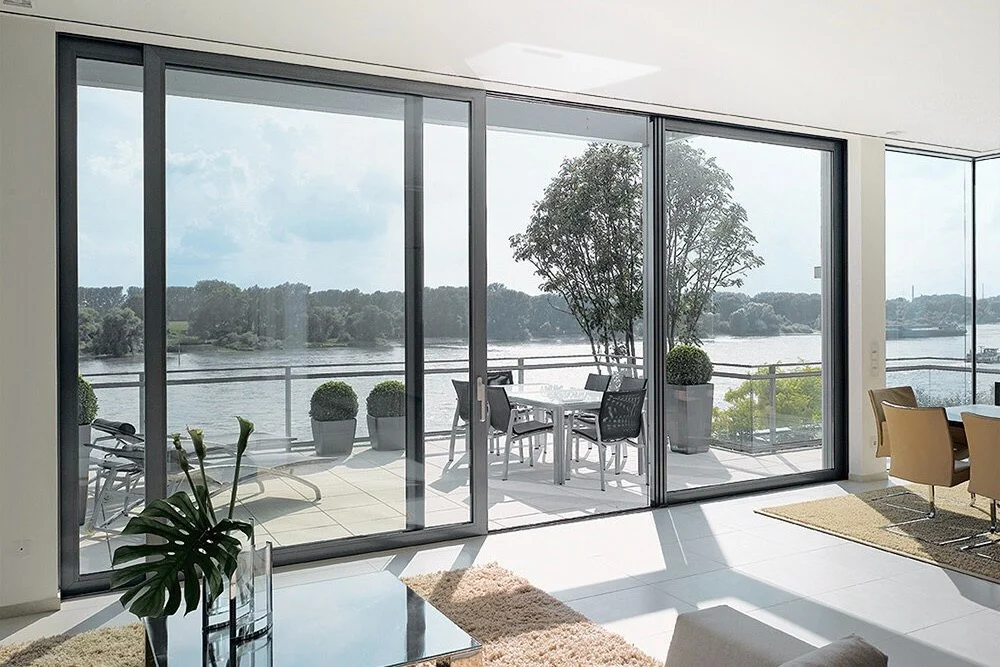
Choosing the right sliding door for your home can feel like a big decision.
Aluminum and vinyl sliding doors are two popular choices, each with its own benefits.

If you’re updating your patio, creating an indoor-outdoor space, or simply looking for a stylish and functional door option, it’s important to know the differences.
Let’s dive in and find out which sliding door option is right for you!
What Are Aluminum Sliding Doors?

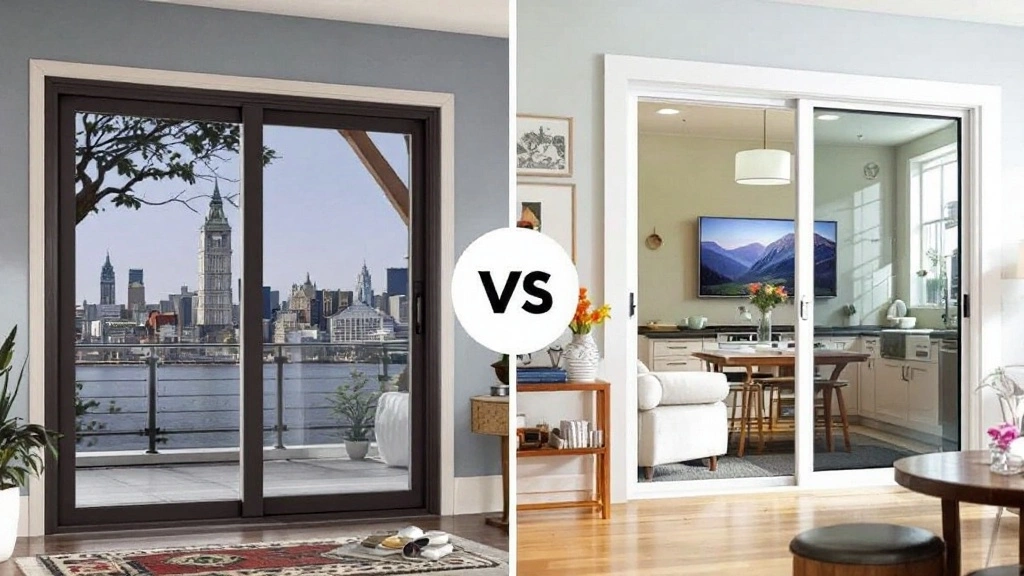
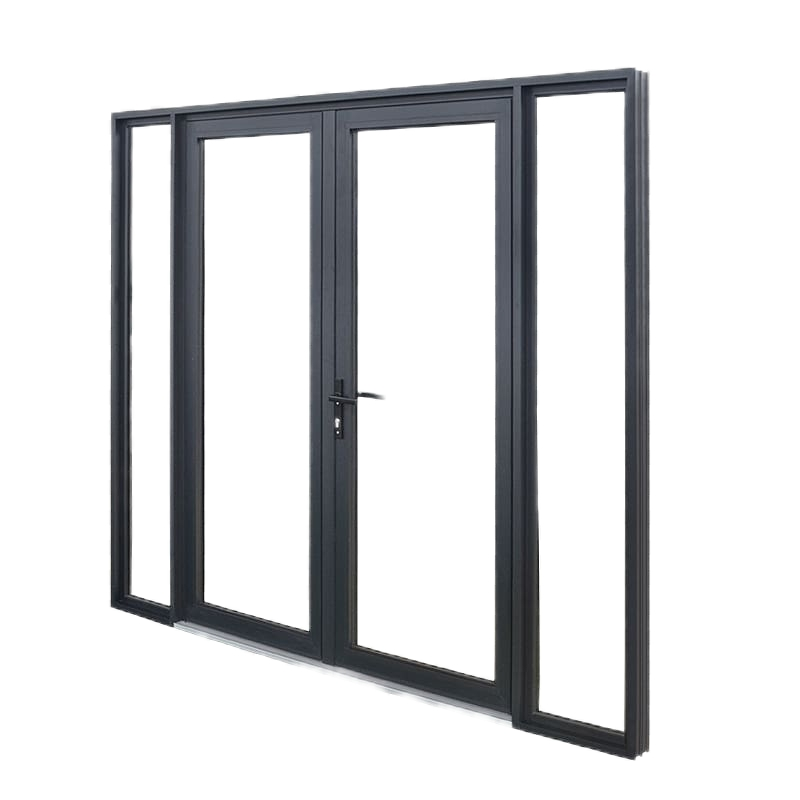
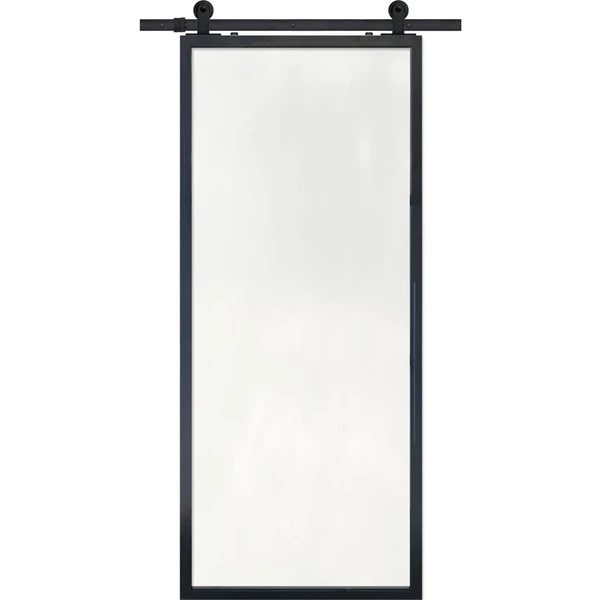
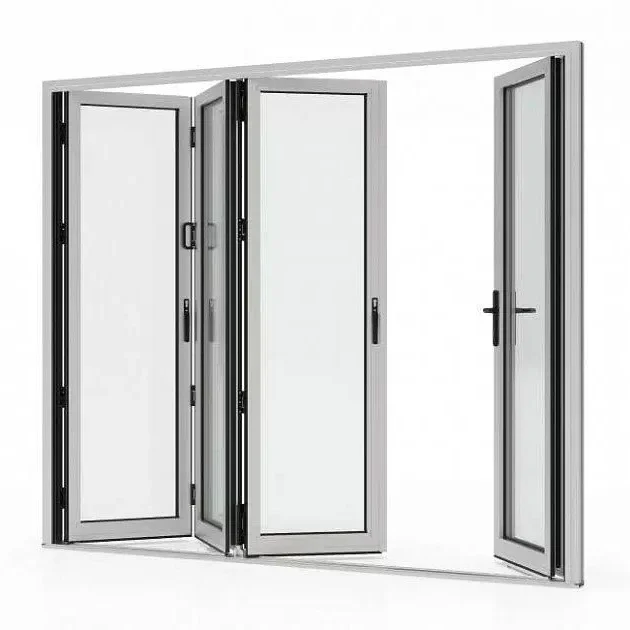
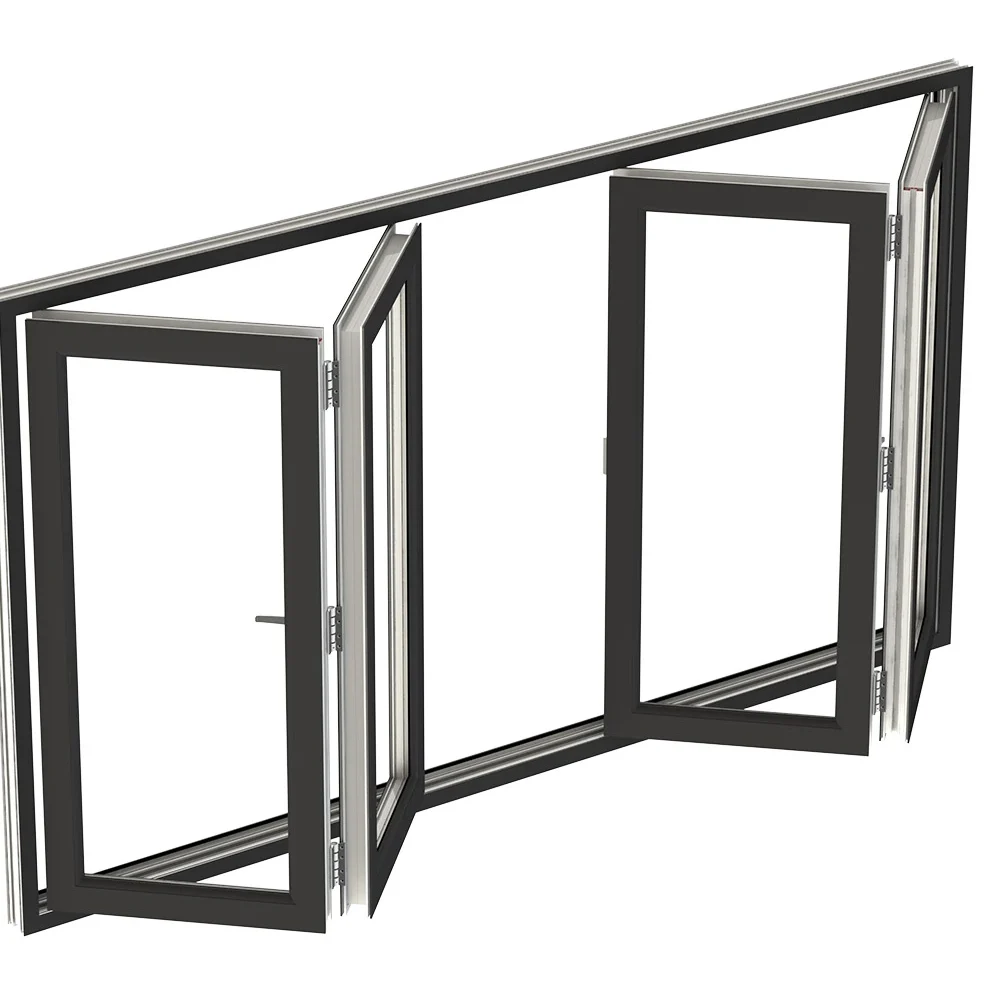
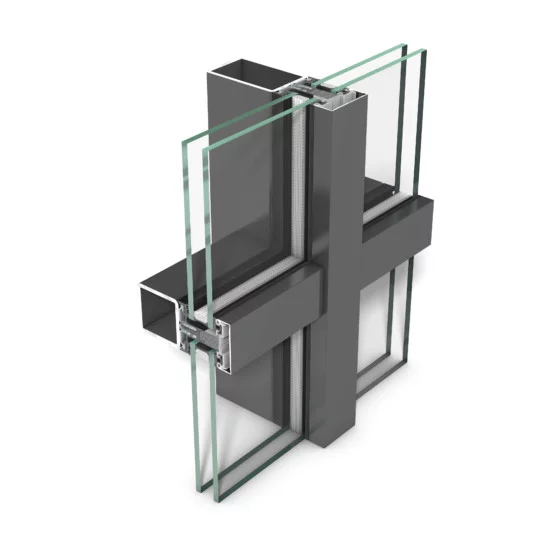
Aluminum sliding doors feature lightweight and durable aluminum frames that support large glass panels.
These doors operate on a track system, allowing them to slide horizontally with ease.
The aluminum frames often include thermal breaks, enhancing energy efficiency by reducing heat transfer.
Naturally resistant to rust and corrosion, aluminum sliding doors are ideal for both indoor and outdoor use, making them versatile in various settings.
These doors are especially suited for modern and industrial-style homes.
They are also perfect for high-traffic areas like patios, balconies, and commercial spaces, where durability and strength are key.
Pros & Cons of Aluminum Sliding Doors
| Pros | Cons |
|---|
| ✅ Durable and long-lasting | ❌ Higher upfront cost |
| ✅ Slim frame for larger glass views | ❌ Can dent with strong impact |
| ✅ Low maintenance | ❌ Less insulation without thermal breaks |
| ✅ Resistant to rust and decay | ❌ Heavier than vinyl doors |
| ✅ Sleek, modern aesthetic | ❌ May require anti-corrosion coating in humid areas |
What Are Vinyl Sliding Doors?
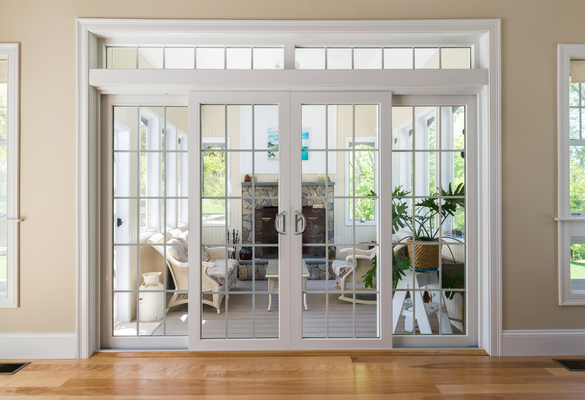
Vinyl sliding doors are doors with frames made from vinyl, a type of durable plastic known for its energy efficiency and low maintenance.
These doors slide horizontally on a track system, offering a smooth and quiet operation.
Vinyl frames are naturally insulating, helping to maintain a stable indoor temperature.
They are resistant to moisture, rust, and mold, which makes them a great choice for both indoor and outdoor settings.
Vinyl sliding doors are also available in a variety of colors and styles, offering design flexibility for any home.
Vinyl sliding doors are perfect for residential spaces where energy efficiency and affordability are top priorities.
They are commonly used for patios, balconies, and other areas where an easy transition between indoor and outdoor spaces is needed.
Pros & Cons of Vinyl Sliding Doors
| Pros | Cons |
|---|
| ✅ Highly energy-efficient | ❌ Can crack in extreme cold |
| ✅ Low maintenance | ❌ Limited color options |
| ✅ Affordable | ❌ Less durable than aluminum |
| ✅ Moisture and rust resistant | ❌ Can warp under high heat |
| ✅ Good sound insulation | ❌ Not as strong for large panels |
Key Differences Between Aluminum & Vinyl Sliding Doors