












When it comes to modern architecture, choosing the right window system can make a big difference in both the look and functionality of your building.

If you’re considering a glass façade for your commercial or residential property, you’re probably weighing the options between a curtain wall and a window wall.
In this guide, we’ll help you understand the key differences between curtain walls and window walls, including their construction, advantages, and when you should choose one over the other.
Let’s dive in and explore which option is best for your next project!
What Is a Curtain Wall System?

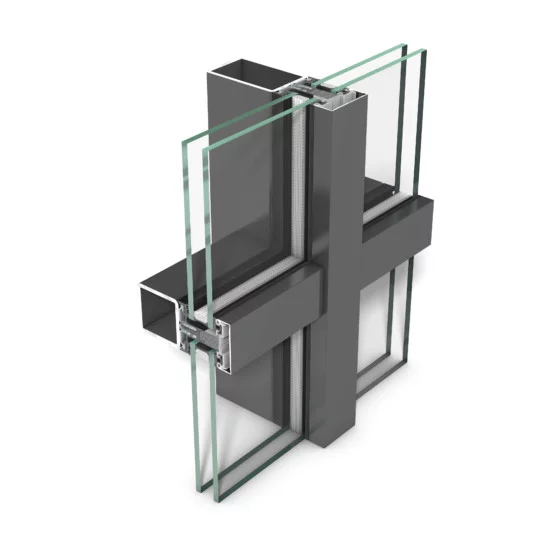
A curtain wall is a non-load-bearing exterior wall system used in modern buildings.
It hangs from the building’s structural frame, much like a curtain, and doesn’t support the weight of the floors or roof above it.
Instead, it acts as a protective barrier, shielding the interior from the outside elements while allowing natural light to flood the space.
Curtain walls are ideal for high-rise buildings, office towers, and large commercial spaces.
Construction Features
Curtain walls are typically made from aluminum, glass, and sometimes steel.
These materials are chosen for their strength, durability, and lightweight properties.
The construction process involves two main system types:
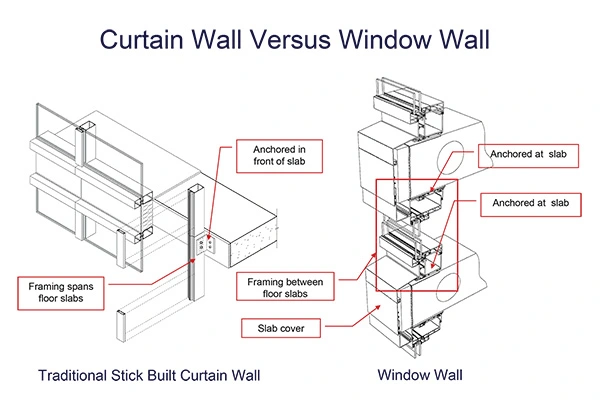
Stick-Built System: In this method, individual components such as vertical mullions (the framing members) and glass panels are assembled on-site. The pieces are installed one by one, making it a more flexible, but labor-intensive process.
Modular (Unitized) System: Here, larger prefabricated units are built off-site in a controlled environment. These units are then transported and installed as whole sections, making the installation process faster and more efficient.
Pros and Cons
| Pros | Cons |
|---|---|
| Design Flexibility: Highly customizable in terms of size, shape, and finish. | Higher Cost: More expensive than other systems due to materials and installation complexity. |
| Weather Resistance: Withstands harsh weather conditions like wind, rain, and snow. | Installation Complexity: Requires skilled labor and specialized equipment, making installation time-consuming and costly. |
| Large Glass Panels: Ideal for panoramic views and maximizing natural light. | Maintenance: Requires regular maintenance, including checking seals and cleaning, to ensure long-term performance. |
| Thermal and Structural Performance: Provides excellent insulation and structural support, reducing energy costs. | / |
What Is a Window Wall System?

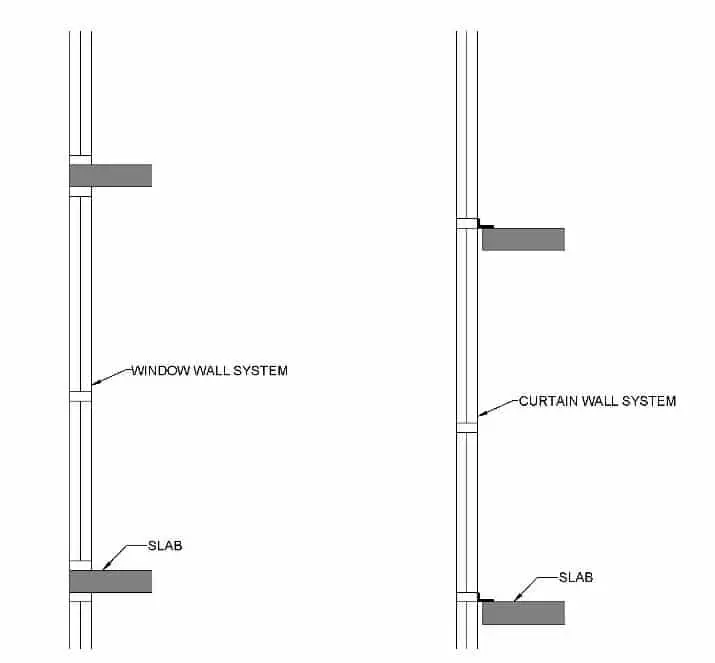
A window wall is a non-load-bearing glass façade system that is installed between floor slabs.
Unlike curtain walls, which are attached to the building’s exterior and span multiple stories, window walls are anchored between the concrete floors.
They provide a sleek, modern look and are primarily used to enhance natural light and views.
Window walls are ideal for low- to mid-rise buildings, including residential buildings, small office spaces, and commercial buildings.
Construction Features
Window walls are typically pre-fabricated off-site, then transported to the construction site as complete units.
They are sealed with caulking or weatherproofing materials to prevent moisture infiltration.
The system is fastened at both the head and sill of the building, ensuring a tight seal between the floors.
Materials used for window walls commonly include aluminum framing and glass panels.
Pros and Cons
| Pros | Cons |
|---|---|
| Cost-Effective: More affordable than curtain walls due to simpler installation and material requirements. | Limited to Single-Floor Spans: Typically cannot exceed one floor in height, making them less suitable for high-rise buildings. |
| Easy Installation: Window walls are pre-fabricated, allowing for faster installation without the need for on-site glazing. | Less Energy-Efficient: Less effective at insulating compared to curtain walls, leading to higher energy costs over time. |
| Soundproofing: Reduces sound transmission between floors, making them ideal for residential and office environments. | Potential for Leaks: The seals between panels may deteriorate over time, causing water infiltration issues. |
| Design Flexibility: Offers flexibility in design, allowing for a modern, sleek aesthetic with expansive glass panels. | Maintenance: Requires more maintenance than other systems, particularly the joints and seals that may wear over time. |
Key Differences Between Curtain Wall & Window Wall
Factors to Consider When Choosing Between Curtain Wall & Window Wall

When deciding between curtain walls and window walls, consider factors like building height, climate, energy efficiency, aesthetics, and budget.
- Building Height & Load Requirements: Curtain walls are ideal for tall buildings, as they span multiple floors. Window walls work better for low-rise structures with single-floor spans.
- Climate & Weather Exposure: Curtain walls are more resilient to harsh weather and high winds, making them better for extreme climates. Window walls are suitable for milder environments.
- Energy Efficiency Needs: Curtain walls offer superior insulation, making them ideal for colder climates. Window walls provide good energy efficiency but are less effective in extreme temperatures.
- Aesthetic Preferences: Window walls provide an open, modern look with unobstructed views, perfect for smaller buildings. Curtain walls offer seamless facades, ideal for high-rises.
- Budget & Installation Complexity: Window walls are cheaper and easier to install, while curtain walls are more expensive but provide long-term durability and performance.
Conclusion
Choose curtain walls for high-rise buildings or large commercial projects where durability, weather resistance, and a continuous facade are essential.
Window walls are perfect for smaller buildings or residential projects, offering a cost-effective, easy-to-install option with excellent sound control.
Not sure which system is best for your project?
Contact us today for expert advice and a custom solution tailored to your building’s needs.
Get a quote for your curtain wall or window wall system now!